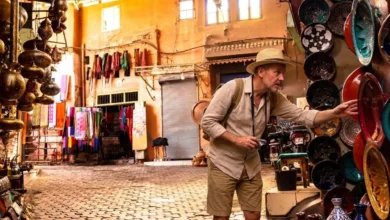
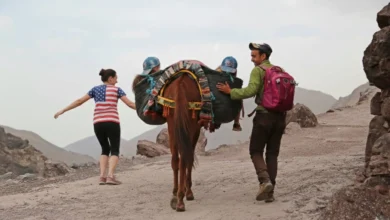
When Morocco comes up in conversation, minds immediately wander to the enchanting maze of Marrakech, the mesmerizing blue walls of Chefchaouen, and the ancient souks of Fes. Yet the question that stops many travelers before booking their flight remains the same: “Is it ok to travel to Morocco?”
The short answer: Absolutely yes, and the statistics prove it. But the complete answer deserves a deeper look, especially when you realize that many concerns stem from outdated stereotypes about Africa that simply don’t reflect Morocco’s reality today.
Table of Contents
When Numbers Tell the Truth: Morocco vs. the United States
Let’s start with a fact that might surprise you: You’re more than three times less likely to be murdered in Morocco than in the United States. According to 2023 data, Morocco’s homicide rate stands at 1.75 per 100,000 people, while the United States reached 5.76 per 100,000. This isn’t opinion or personal impression—these are official statistics documented by the United Nations Office on Drugs and Crime and the U.S. Centers for Disease Control and Prevention.
The key difference? Guns. In Morocco, civilian firearm ownership is completely prohibited except for hunting under strict regulations. By contrast, the United States recorded over 16,000 firearm deaths in 2024 alone, with more than 499 mass shooting incidents during the same year. In Morocco? Gun violence is virtually nonexistent.
International Trust: When the World Chooses Morocco
Here’s a powerful indicator that can’t be ignored: FIFA and the Confederation of African Football do not award major tournaments to unstable countries. Morocco successfully hosted the Africa Cup of Nations, delivering an exceptional edition that earned widespread international praise for its professionalism, organization, and security standards. This success comes ahead of Morocco’s co-hosting of the 2030 World Cup with Spain and Portugal, which will bring millions of fans to cities like Casablanca, Rabat, Marrakech, Tangier, Fes, and Agadir.
Morocco’s selection was no coincidence. The kingdom has repeatedly demonstrated its ability to organize large-scale international events at the highest level — from global financial summits to major climate conferences. During AFCON, Morocco showcased a robust security infrastructure and highly professional security forces, particularly in major cities and tourist zones, reinforcing its image as a safe and reliable host for world-class events.
Global Safety Rankings: Morocco Among Safe Destinations
Morocco ranks 85th out of 163 countries in the 2025 Global Peace Index, placing it firmly in the category of relatively safe nations.
More importantly, travel and security intelligence agencies classify Morocco within the “moderate risk” group, making it the safest destination in the entire Middle East and North Africa region. This classification puts Morocco on par with many popular European tourist destinations.
Travel Advisories: Reading Between the Lines
Yes, the U.S. State Department places Morocco at Level 2 (Exercise Increased Caution). But did you know France, the United Kingdom, and Germany carry the same classification? Some major American cities actually have significantly higher crime rates than any Moroccan city.
Official advisories must be read in context. They’re precautionary measures governments issue to protect their citizens, not calls to avoid travel entirely. If we applied these warnings literally, there would be no safe place to travel in the world—including within the United States itself, which recorded 359 violent crimes per 100,000 people in 2024.
Hundreds of thousands of British travelers visit Morocco annually, and most trips pass without incident. This figure alone speaks to a reality far different from the stereotype.
Read also: Is Morocco Safe for Americans? A 2026 Travel Guide That Might Change Your Mind
Petty Crime: The Reality on the Ground
Let’s be realistic: Petty crime exists in Morocco, just as it exists in Paris, London, Barcelona, and Rome. Pickpocketing in crowded markets, pushy vendors, taxi drivers who might try to overcharge—all these can be easily avoided with simple awareness and common sense.
The crucial difference? These are non-violent crimes. You won’t hear about shootings, and you won’t worry about armed violence. Most problems tourists might face in Morocco are limited to minor scams easily avoided: agree on taxi fares beforehand, avoid overly crowded markets alone at night, don’t flash large amounts of cash in public.
Cultural Openness and Genuine Hospitality
Morocco is multicultural by nature. Its geographic position as a bridge between Africa, Europe, and the Arab world has made it a meeting point of civilizations. The indigenous Amazigh culture blends with Arab, European, and African influences, creating a society exceptionally welcoming to foreigners.
Moroccans are known for generosity and hospitality. It’s not uncommon for a local to walk you to your destination if they sense you’re lost, or invite you for tea in their home. This tradition is deeply rooted in Moroccan culture, not just a tourist facade.
Racism? Rare. Hostility toward foreigners? Nearly nonexistent. Morocco faces no major international enmities and isn’t engaged in regional conflicts, making it a neutral and safe destination for everyone regardless of nationality or background.
Navigating Local Culture: Practical Tips
Morocco is a relatively conservative Muslim country, but it’s simultaneously open to tourism and tolerant of cultural differences. The key is mutual respect and common sense.
For Women Travelers
Women can travel safely to Morocco, whether solo or in groups. However, there are simple considerations: In rural areas and small villages, modest clothing is preferable (covering shoulders and knees). In major cities and tourist areas, there’s more flexibility, but relative modesty remains more comfortable.
Verbal harassment may occasionally occur, especially in crowded markets, but it rarely escalates beyond that. A firm, clear response is usually sufficient. Many women travel to Morocco solo annually and return with positive experiences.
Respecting Customs and Traditions
Simple rules make your trip smoother: Avoid excessive public displays of affection in public spaces, respect prayer times especially on Fridays, don’t photograph people without permission, avoid discussing politics or sensitive issues with strangers.
During Ramadan, eating and drinking publicly on the streets during daylight hours is considered disrespectful, though tourist restaurants remain open. These aren’t strict laws, but signs of respect that are greatly appreciated.
Alcohol and Prohibited Substances
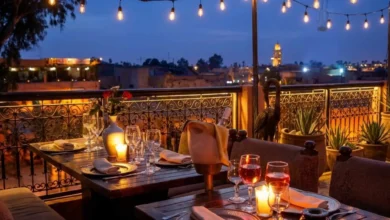
Alcohol is available in Morocco but limited to tourist restaurants, hotels, and licensed bars. Buying from stores is possible but requires going to designated shops. Drinking alcohol on the streets is completely prohibited.
Drugs? Strictly forbidden in Morocco, with severe penalties. Possession or consumption is a serious crime that can lead to imprisonment. Don’t fall for any suspicious street offers—they’re often traps.
Read also: Travelling to Morocco as an Unmarried Couple in 2026: Law vs Reality Explained
Experiencing Tourist Cities
Marrakech: Organized Chaos
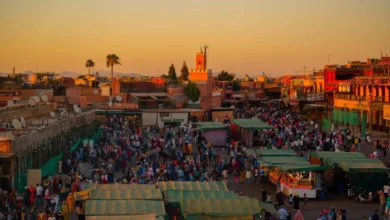
Jemaa el-Fna square in Marrakech may seem chaotic at first glance—musicians, snake charmers, vendors, storytellers, all competing for your attention. But this chaos is perfectly organized, and tourist police are always present. Walking in the medina at night is relatively safe as long as you stay on well-lit main streets.
Fes: A Safe Labyrinth
The old city of Fes is the world’s largest car-free urban area and a genuine maze of narrow alleyways. Yes, you’ll get lost. Everyone gets lost. But that’s part of the magic. Locals are always willing to help, and being lost in Fes is safer than walking the streets of many European capitals at night.
Casablanca: Modernity and Safety
Morocco’s largest economic city combines modernity with heritage. Yes, it’s a big city with poor neighborhoods best avoided at night, just like any major city worldwide. But the main tourist areas—from Hassan II Mosque to the Ain Diab Corniche—are well-monitored and very safe.
Chefchaouen: Blue Serenity
The small blue city in the Rif Mountains is perhaps the most peaceful and secure place in Morocco. Its relaxed atmosphere and quiet streets make it ideal for unwinding away from the bustle of larger cities.
Frequently Asked Questions About Safety in Morocco
Is it safe to go to Morocco right now?
Absolutely yes. Morocco is currently one of the safest destinations in the region and has already proven this by successfully hosting the Africa Cup of Nations, welcoming hundreds of thousands of international visitors in a secure and well-organized environment. This major sporting event stood as a clear testament to Morocco’s stability and strong security infrastructure.
The kingdom has also significantly upgraded its security systems and tourism facilities in preparation for upcoming global events, most notably the 2030 World Cup. International organizations and FIFA would not choose Morocco to host such massive tournaments if there were any genuine safety concerns.
Are Moroccans friendly to tourists?
Very much so. Moroccan hospitality is legendary and deeply embedded in the culture, not a marketing gimmick. The concept of welcoming strangers is fundamental to Moroccan values, rooted in both Islamic tradition and Amazigh customs. You’ll find locals genuinely eager to help tourists—whether offering directions, sharing recommendations, or simply practicing their language skills. Morocco’s economy significantly depends on tourism, and locals understand and appreciate visitors. The country’s position as a cultural crossroads has created a population naturally comfortable with diversity and foreign guests. It’s common for shop owners to offer you mint tea even if you don’t buy anything, or for locals to go out of their way to ensure you find your destination safely.
Is Morocco safe for women?
Yes, Morocco is safe for women travelers, including solo female travelers, though some cultural awareness helps. Thousands of women travel to Morocco independently each year without serious incidents. The key is respecting local customs: dress modestly (covering shoulders and knees) especially outside major tourist areas, maintain confidence in your demeanor, and trust your instincts. While verbal harassment can occur in crowded areas, it rarely escalates to physical threats. Many women find Moroccan men respectful once boundaries are clearly established. In riads and hotels, female staff and travelers often form supportive communities. Major cities have strong police presence in tourist areas, and locals generally look out for visitors. Joining group tours or hiring official guides for medina exploration can enhance both safety and experience. The important distinction is that while minor annoyances may occur, violent crime against women is rare in Morocco compared to many Western destinations.
Can I walk around safely at night?
In major cities and tourist areas, generally yes. Stick to well-lit main streets and avoid neighborhoods far from the center. In small villages, nightlife is very quiet, and streets are nearly empty after 9 PM.
What about protests and demonstrations?
Morocco has stabilized politically significantly in recent years. Protests are rare, and when they occur, they’re organized and limited. As a tourist, simply stay away from any unusual large gatherings.
Is terrorism a real threat?
Terrorist incidents in Morocco are extremely rare, with the last one occurring several years ago. This rarity isn’t coincidence but a reflection of Moroccan society itself. Armed violence and extremist thought find no acceptance in a diverse, tolerant social fabric where Moroccans of different orientations coexist in mutual respect. Moroccan security forces are highly active in counterterrorism, with strong international cooperation, making the terrorist threat in Morocco much lower than in most European capitals.
Do I need special insurance?
Basic medical and travel insurance is sufficient. You don’t need additional insurance for dangerous areas because Morocco isn’t one.
Are food and water safe?
Tap water in major cities is generally safe, but most tourists prefer bottled water to avoid stomach issues. Food in major tourist restaurants is completely safe. At small street stalls, use common sense: choose places where you see locals eating.
Is transportation safe?
Trains are clean, safe, and punctual. Intercity buses are reliable. Petit taxis (small taxis) within cities are cheap and safe, but agree on the price before boarding or ensure the meter is running. Apps like InDrive and Careem are available in major cities and more convenient.
The Bottom Line: Time to Reconsider the Narrative
The stereotype of Africa as a dangerous, unstable continent no longer reflects reality in most countries, and Morocco is a shining example. When you compare actual numbers—homicide rates, violent crimes, firearm incidents—you find Morocco is safer than many destinations we don’t hesitate to visit.
Choosing travel destinations should be based on facts, not impressions. So, is it ok to travel to Morocco? More than okay—it’s an excellent choice. Morocco is a stable, open, hospitable country investing heavily in tourism and security infrastructure. Millions of tourists visit annually and return with wonderful memories.
Does this mean you won’t face any problems? Of course not. As anywhere in the world, caution and vigilance are necessary. But the idea that Morocco is a dangerous destination to avoid is simply wrong, based on an outdated stereotype with no basis in truth.
Morocco awaits you with its colorful alleys, towering mountains, enchanting desert, and beautiful beaches. And most importantly: it awaits you safely.
Read also