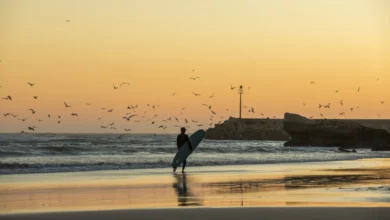
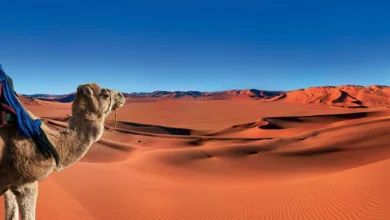
In 2025, Morocco welcomed nearly 20 million tourists from around the world—a record-breaking number the Kingdom had never achieved before. While this figure might seem modest compared to tourism giants like France (102 million visitors), Spain (93 million), or the United States (72 million), here’s what makes it remarkable: Morocco has a population of just 37 million people, meaning the number of tourists exceeded half the country’s entire population. This achievement also solidified Morocco’s position as the number one tourist destination on the African continent.
Within this record-breaking wave of visitors, Marrakech alone welcomed over 5 million tourists, cementing its status as Morocco’s most sought-after destination. And when we talk about Marrakech—or the Red City, as Moroccans affectionately call it—we’re talking about a place that can steal your heart from the very first moment. The second your feet touch the cobblestones of the ancient medina and its bustling squares, you find yourself immersed in a world of colors, scents, and sounds unlike anywhere else on earth. This city doesn’t offer you a typical sightseeing tour; it delivers a complete sensory experience that stays etched in your memory for life.
In this article, I’m putting together a comprehensive Marrakech travel guide drawing from my background as a journalist specializing in tourism media and my genuine, firsthand knowledge of this city. Consider this everything you need to plan a successful trip to Marrakech.
Table of Contents
When Is the Best Time to Travel to Marrakech?
As a Moroccan, I can tell you that the best time to visit Morocco in general—and Marrakech specifically—is during spring (mid-March through May). I strongly recommend planning your travel to Marrakech during this window, when temperatures hover between 68°F and 77°F (20-25°C), allowing you to wander through the souks and explore landmarks in complete comfort. Flowers bloom throughout the gardens, and the weather is absolutely perfect.
The light in Marrakech during this season has a special magic that photographers know well. The golden sun bathes the pink buildings in a warm glow, especially during the hours before sunset when rooftop terraces transform into viewing platforms overlooking an unforgettable scene.
If spring doesn’t work for your schedule, fall (September through November) ranks as the second-best time to travel to Marrakech. After the intense summer heat subsides, pleasant weather returns, and tourist numbers drop compared to peak season, giving you the chance to explore the city with more breathing room.
If neither of these seasons works for you, I’d advise against visiting during summer when temperatures regularly exceed 104°F (40°C). As for winter, it gets quite cold—though I should add a caveat here. I don’t know where you’re reading this from, but if you’re coming from Europe or Canada, what we Moroccans consider unbearably cold might feel perfectly warm to you. At least temperatures don’t drop below freezing.
One more thing: if your visit coincides with Ramadan (the fasting month in Islamic countries), expect many restaurants to close during daylight hours. However, this presents a unique opportunity to experience a special spiritual atmosphere and witness the city in its rare moments of stillness during the evening call to prayer.
How Many Days Do You Actually Need in Marrakech?
Before I suggest a specific duration, let me be honest with you: there’s no one-size-fits-all answer. The ideal length depends entirely on what kind of traveler you are and what you’re hoping to get from this trip.
The Deep-Dive Explorer who loves immersing themselves in a city’s details and getting up close with its culture will need four to five days. This gives you enough time to wander through the souks without rushing, visit historical landmarks at a relaxed pace, perhaps attend a cooking workshop, or spend a day in the Atlas Mountains. This type of traveler needs time to adjust to the city’s rhythm before truly beginning to enjoy it.
The Passing-Through Traveler visiting Marrakech as part of a broader Morocco itinerary or as a quick stop will find two to three days sufficient for seeing the main highlights and getting a taste of the city’s soul. But be realistic: in this timeframe, you won’t be able to go deep—you’ll stick to the essentials.
The Relaxation Seeker who wants to escape life’s pressures and soak in the atmosphere of traditional riads and resorts could easily spend a full week without getting bored, because their goal isn’t “seeing everything” but rather “feeling the place.”
What I can say with confidence is that one day will never be enough. The old medina alone requires time just to navigate its alleys, let alone the landmarks, souks, and other experiences.
One final note: many people who visited Marrakech for a short stay came back later for a longer trip, after realizing the city needs more time than they initially expected.
Where to Stay in Marrakech: Traditional Riads vs. Modern Hotels
The Authentic Riad Experience
Your Marrakech experience isn’t complete without staying in a traditional riad. A riad is a traditional Moroccan house built around an interior courtyard, usually featuring a fountain and a small garden. Hundreds of riads in the old medina have been converted into boutique hotels offering an accommodation experience you simply won’t find in conventional hotels.
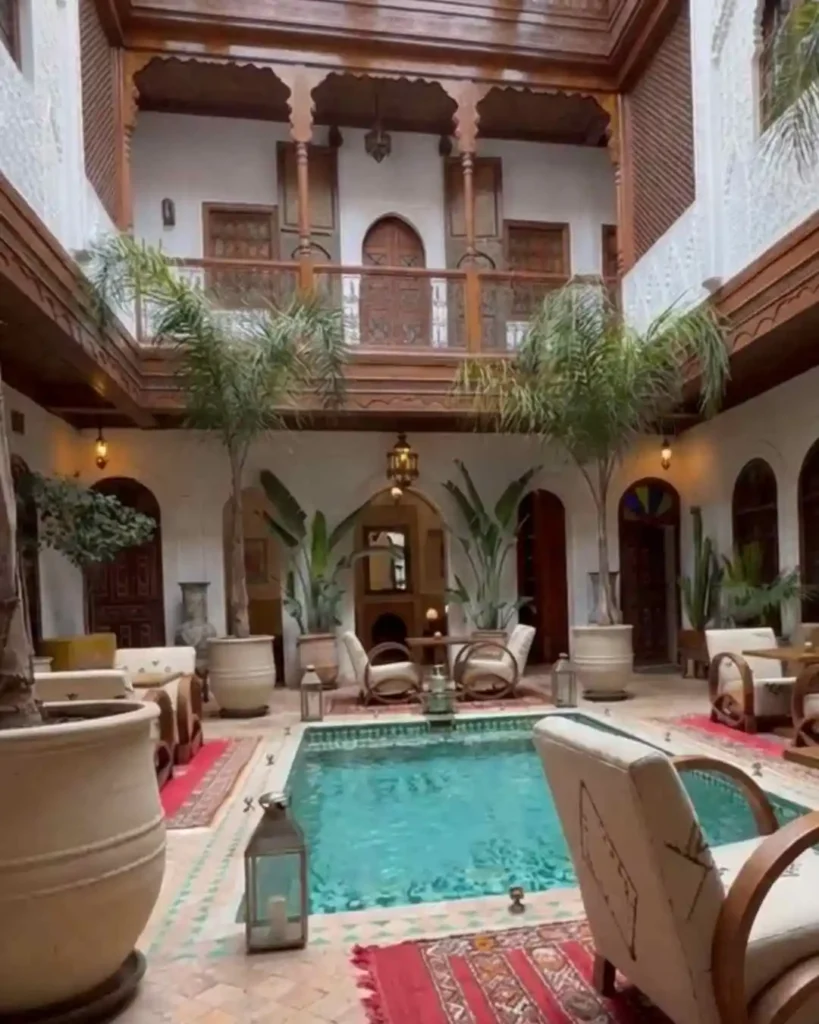
What makes staying in a riad special is the authentic architectural experience that envelops you from the moment you step inside. You wake up in the morning to enjoy a traditional Moroccan breakfast on the rooftop terrace with panoramic views of the city and the Koutoubia minaret. The riad gives you privacy and tranquility away from the chaos of the souks, plus direct connection with local culture through your hosts who make it their mission to create an unforgettable stay.
Recommended Riads and Hotels
For Mid-Range Budgets
The old medina offers dozens of riads combining architectural authenticity with reasonable prices. Look for properties in relatively quiet areas that are still close to main attractions, and make sure to read reviews from previous guests. Options with solid reputations include Riad 72 with its contemporary design, Riad Yasmine famous for its beautiful courtyard, and Riad Jmana with its stunning courtyard fountain—plus countless others offering similar experiences at varying price points.
For Those Seeking Luxury
If your budget allows for an exceptional experience, Marrakech is home to some of Africa’s finest hotels. La Mamounia has represented the legend of Moroccan hospitality for decades with its stunning gardens. Royal Mansour offers the pinnacle of luxury where every suite is essentially a private riad. International brands like Four Seasons and Mandarin Oriental also compete to deliver the ultimate guest experience.
Outside the Old Medina: The Resorts
If you prefer peace, quiet, and wide-open spaces away from the medina’s bustle, upscale resorts await you outside the city walls. These properties feature golf courses, Atlas Mountain views, and expansive green spaces—ideal for families and couples seeking relaxation with the option to visit the city whenever they choose.
Must-See Attractions and Experiences in Marrakech
Jemaa el-Fna Square: The City’s Beating Heart
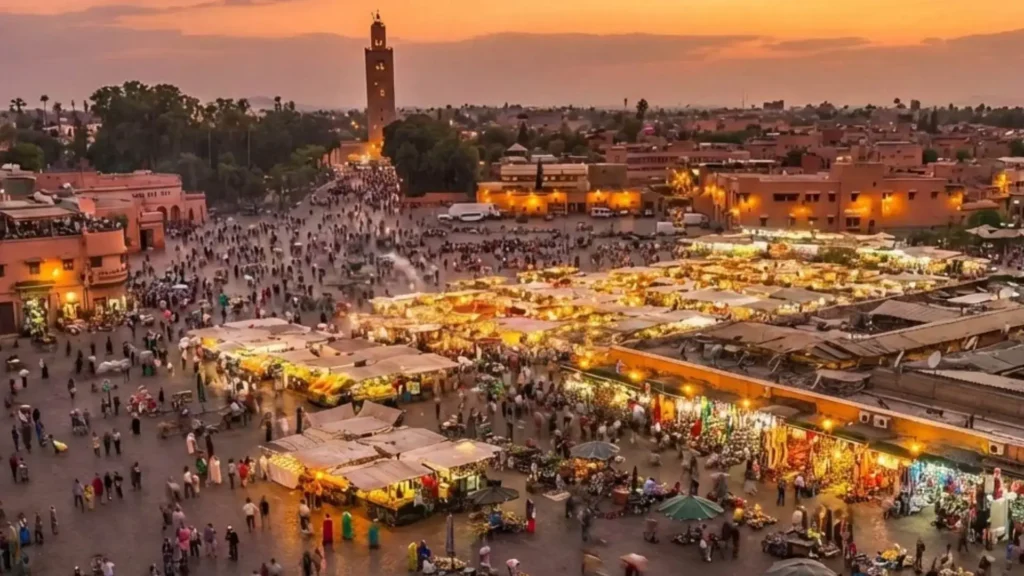
You cannot talk about Marrakech without mentioning Jemaa el-Fna, listed as a UNESCO Intangible Cultural Heritage site. During the day, you’ll find street vendors and fresh-squeezed orange juice and other delicious fruits prepared right before your eyes. As the sun sets, the square transforms into an open-air theater where storytellers (halaiqi) share folk tales, snake charmers perform their mesmerizing acts, and dozens of mobile food stalls fill the air with the aroma of tagine and grilled meats.
For a panoramic view of this spectacle away from the crowds, head to one of the cafés overlooking the square, order a glass of mint tea, and watch the action unfold from above.
The Traditional Souks
The souks branching off from Jemaa el-Fna form a magical labyrinth of colors and scents, with each market specializing in a particular craft. You’ll discover the dyers’ souk with its vibrant colors hanging from above, the coppersmiths’ souk with its rhythmic hammering you can hear from a distance, and the historic leather souk carrying the scent of centuries past.
As for what to buy, the options are endless. Handwoven Amazigh (Berber) rugs rank among the most beautiful items you can acquire, along with leather goods—handcrafted bags and shoes. Colorful pottery and traditional Moroccan zellige tilework add an authentic touch to any home. Spices and aromatic herbs make perfect gifts that carry the scent of Marrakech wherever you go. Don’t forget the brass and colored glass lanterns that create enchanting ambiance, organic argan oil famous for its benefits, and traditional Moroccan tea glasses that will remind you of every sip of mint tea you enjoyed here.
Remember to bargain in these markets—the first price a seller quotes is never final, and you can often get items for half the asking price or even less. While this might feel exhausting to some, it’s an authentic part of local culture. A French friend of mine once spent over two hours negotiating for an Amazigh rug. Despite the exhaustion, he described the experience as enjoyable and absolutely worth it—that rug became the centerpiece of his living room.
Marrakech Souks: Where Getting Lost Is Part of the Adventure
Bahia Palace
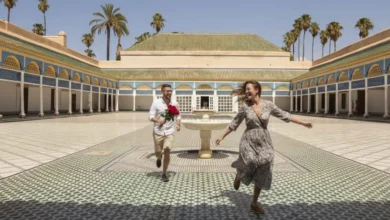
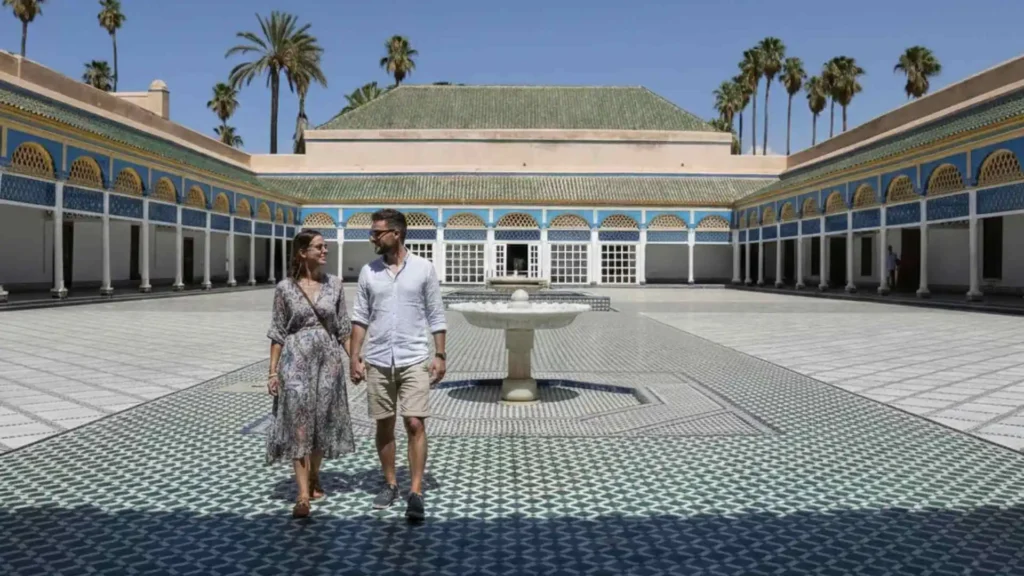
During your time in Marrakech, don’t miss Bahia Palace—a 19th-century architectural masterpiece reflecting the pinnacle of Moroccan craftsmanship. When you enter, you find yourself surrounded by intricately carved wooden ceilings, colorful zellige tilework telling the story of the artisans who created it, and peaceful interior gardens inviting contemplation. Every corner of this palace deserves a pause and a photograph.
Ben Youssef Madrasa
This Quranic school, historically the largest in North Africa, stands as one of Marrakech’s most beautiful historic buildings. Restored in 2022 and reopened to visitors in renewed splendor, it continues to amaze everyone who enters with its delicate stucco work and stunning mosaics—testament to the genius of Moroccan craftsmen.
Majorelle Garden and the Yves Saint Laurent Museum
The distinctive cobalt blue of Majorelle Garden has become a global symbol of Marrakech. French artist Jacques Majorelle established it in the 1920s and spent forty years designing and collecting plants from different continents. After his death, it nearly became a hotel until designer Yves Saint Laurent and his partner Pierre Bergé purchased it in 1980 to save it from demolition and restore its glory. The adjacent museum, opened later, showcases Saint Laurent’s creations in a modern architectural building worth visiting in its own right. I recommend booking your tickets in advance and arriving at opening time to avoid crowds and enjoy the garden in peace.
Le Jardin Secret (The Secret Garden)
After hours of wandering through the bustling souks, nothing beats Le Jardin Secret as an oasis of calm and relaxation. This historic garden hides behind high walls in the heart of the old medina, featuring plants from around the world, peaceful fountains, and a café serving traditional Moroccan tea. It’s the perfect place to catch your breath before continuing your adventure.
The Moroccan Hammam Experience
Don’t leave Marrakech without experiencing a traditional hammam—it’s an essential part of Moroccan culture, not just a tourist activity. The cleansing with black olive soap (savon beldi) and exfoliation with a rough mitt (kessa) delivers a deep purification experience for body and soul. You’ll emerge with skin as soft as a baby’s. This experience is available at public hammams for very affordable prices, as well as at luxury hotels and resorts for those who prefer more privacy.
Best Restaurants in Marrakech
For Authentic Moroccan Cuisine
Marrakech overflows with restaurants serving Moroccan cuisine at various levels. Among the upscale options with views, Nomad stands out with its outlook over the spice market and contemporary Moroccan kitchen. L’Mida boasts what’s said to be the highest rooftop in the old medina. Le Jardin offers a different experience in a green garden setting that makes you forget you’re in the heart of the city. These restaurants require advance reservations, especially for sunset timing.
For those seeking a fine dining experience, the major hotels house exceptional restaurants. Le Marocain at La Mamounia offers a tasting menu exploring regional Moroccan cuisine, while afternoon tea at Royal Mansour lets you glimpse the royal hotel’s magnificence.
Don’t overlook the simple local restaurants scattered throughout the alleys—many serve authentic tagine for just a few dollars.
For the Evening Experience
Comptoir Darna is the ideal destination for those wanting dinner with belly dancing and live music. The atmosphere is lively and entertaining, with no pressure to join in the dancing. You’ll also find modern bars and restaurants in the Guéliz district outside the old medina for those seeking a different vibe.
For Learning Moroccan Cooking
If you want to take something from Marrakech that lasts longer than photos and souvenirs, cooking workshops teach you how to make tagine, couscous, and Moroccan mint tea. Several riads and cooking schools offer this experience, most notably La Maison Arabe and Amal (a social enterprise supporting women). The workshop ends with tasting what you’ve created with your own hands, and you take home recipes that will impress your friends back home.
Safety Tips for Traveling to Marrakech
Is Marrakech Safe for Tourists?
The short answer: yes. Marrakech is generally a safe city, and millions of tourists visit annually without any notable problems. But like any major tourist destination, there are things to be aware of and handle smartly.
Read also: Is It OK to Travel to Morocco in 2026? Safety Facts Beyond the Stereotypes
Common Challenges and How to Handle Them
The most common complaint from visitors is the persistence of some vendors pushing their goods or services. The solution is simple: say “no thank you” firmly and keep walking without stopping—don’t get drawn into lengthy discussions. Similarly, someone might offer to help you find your way and then expect payment. If you accept help, expect to pay something. Your best bet is using GPS maps on your phone or hiring an official guide through your hotel.
Regarding price negotiation, remember that there are no fixed prices in the souks, and the first price quoted is always inflated. Negotiate respectfully, start by offering half the price or less, then meet the seller somewhere in the middle. For taxis, use the small “petit taxi” for getting around the city, and insist on the meter or agree on a price beforehand—a typical ride shouldn’t cost more than $2-3.
During rush hours—around 7-8 AM or 6-7 PM—getting a taxi can be difficult due to high demand from locals commuting to and from work. In these cases, you can rely on ride-hailing apps like InDrive for your transportation needs.
What you should know is that after a day or two in the city, most visitors discover that handling these situations becomes much easier—it even transforms into a natural part of the experience.
Tips for Female Travelers
Marrakech is a tourist city through and through, welcoming visitors from around the world year-round. This openness to tourism has made it more accepting and tolerant compared to other cities. In well-known tourist areas, women travelers won’t find anything to worry about, and there are no strict dress code requirements.
What’s simply requested is respecting places of worship and sacred sites as much as possible—something that goes without saying in any country you visit. Throughout the rest of the city, women of all nationalities walk freely and enjoy their experience.
Many women have visited Marrakech solo without encountering any problems worth mentioning. In fact, some share stories of beautiful human connections with Moroccan women they met at public hammams or restaurants.
How to Get to Marrakech and Get Around
Arriving in Marrakech
Marrakech Menara Airport receives direct flights from most European and Gulf cities and sits just 15-20 minutes from the old medina. You can also reach Marrakech by train from Casablanca in approximately 3 hours—a comfortable journey at a reasonable price that lets you watch the Moroccan countryside pass by your window.
Getting Around the City
Walking is the best way to explore the old medina since the alleys are too narrow for cars. For traveling between the medina and outer areas like Majorelle Garden, small taxis or ride-hailing apps work perfectly. However, for your first arrival, I recommend arranging airport pickup through your hotel—the driver will meet you and take you directly to your accommodation.
Day Trips and Nearby Destinations from Marrakech
You don’t have to stay within the city throughout your entire visit, especially if you’re staying for an extended period. Marrakech is surrounded by destinations worth your time and will definitely reward you with incredible experiences.
Agafay Desert
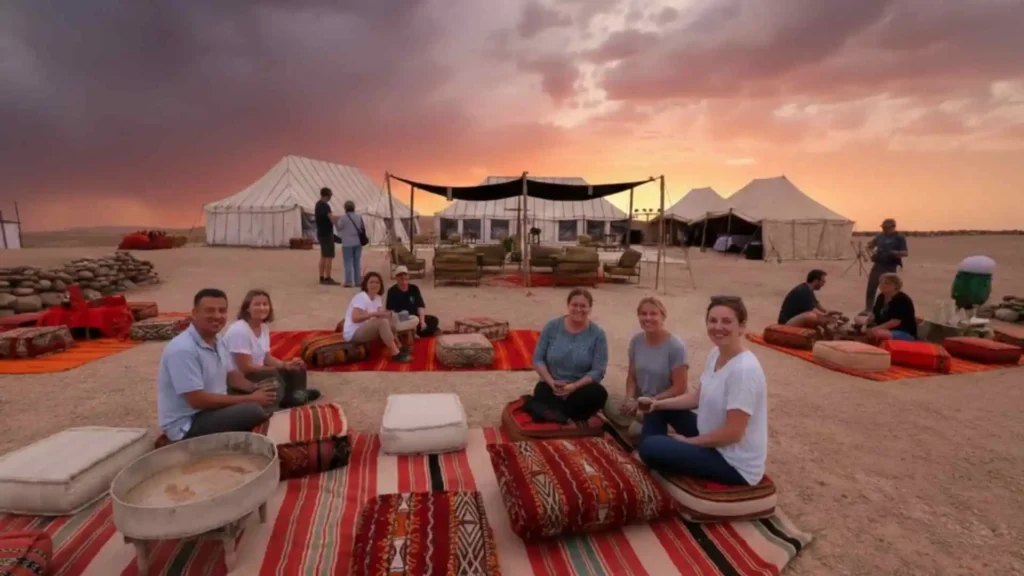
Just 40 kilometers from the city, you’ll find the rocky Agafay Desert offering a wonderful desert experience without traveling long distances. It’s not the Sahara with its golden dunes, but it gives you the chance to ride camels at sunset, enjoy dinner under the stars, and listen to live Amazigh music around a fire. Several camps offer luxury glamping for those wanting to spend a night in the desert, with options at various price points to suit different budgets.
Read also: Sahara Desert Morocco: The 2026 Guide to Dunes, Camps & Everything In Between
The Atlas Mountains and Ourika Valley
You can also break up your routine with a trip to the Atlas Mountains, revealing a completely different face of Morocco from the bustle of Marrakech. You’ll visit traditional Amazigh villages where simple life hasn’t changed for centuries, see cascading waterfalls, and take in breathtaking mountain scenery. Temperatures there run much cooler than the city, making it an ideal escape during the hot summer months.
Essaouira
A charming coastal city about two and a half hours by car from Marrakech, Essaouira offers a completely different artistic, bohemian atmosphere. Strong winds make it a destination for windsurfing and kiteboarding enthusiasts, while the old port serves fresh seafood at reasonable prices. Essaouira deserves a full day—or even two days or more if your schedule allows.
Budgeting for Your Marrakech Trip
Marrakech can drain all your savings and send you home broke, or you can spend little and gain so much. It all comes down to your spending habits and vacation style.
After that bit of unsolicited wisdom, here’s what you can expect for average daily costs based on your situation—assuming you have decent control over your spending:
Budget Travelers ($50-70 per day): You can stay at a simple riad for about $30-40, eat at local restaurants for $10-15, and allocate $10-15 for entrance fees and transportation.
Mid-Range Travelers ($100-150 per day): This allows you to stay at an upscale riad for $60-80, mix between local and upscale restaurants for $30-40, with $20-30 for activities and transportation.
Luxury Travelers ($300+ per day): Options open up from luxury hotels to fine dining and private experiences.
What Visitors Love and What They Criticize
The Positives
Marrakech leaves a deep impression on its visitors. Many describe it as a city unlike any other, where the blend of history, energy, and colors creates a unique experience. Moroccan hospitality, once you get past the surface layer of commercial interactions, reveals genuine warmth and human kindness. Architectural beauty appears around every corner, and Moroccan cuisine surprises many with its depth and variety.
What Requires Preparation
Honesty demands acknowledging that Marrakech isn’t an “easy” city for everyone. The persistence of some vendors annoys many visitors, especially during their first days. Summer heat is genuinely brutal. The chaos and noise in the souks can be exhausting for those accustomed to quieter environments.
But those who come mentally prepared for these challenges—accepting them as part of the experience rather than obstacles—typically leave with positive memories that far outweigh any temporary annoyances.
Final Thoughts
A Canadian friend once asked me about Marrakech, and I found myself pausing before answering. Not because I didn’t know what to say, but because words always seem inadequate for the city itself.
Marrakech cannot be explained—it must be lived. I can describe the scent of spices in the souks, but I cannot convey that moment when this scent seeps into your memory and settles there forever. I can tell you about the beauty of the zellige in Bahia Palace, but I cannot capture the feeling of standing alone in the palace courtyard imagining all those who passed through centuries before.
What I know after years of working in tourism journalism is that great cities don’t reveal their secrets easily. Marrakech belongs to this category. It might exhaust you on your first day. The repeated sales pitches might frustrate you. You might get lost in alleys that all look the same. But if you give it time and patience, it will surprise you with moments of pure beauty: the smile of an old tea seller, afternoon light slipping through an ancient window, the call to prayer suddenly filling the square with serenity.
This guide is your first map. But the real map you’ll draw yourself, step by step, through the alleys of the Red City.
Read also: