When you translate the Arabic word “souk” into English, you get “market”—a place where goods are bought and sold. Simple enough. But in Morocco, a souk is far more than a marketplace. It’s the heartbeat of social life and a living mirror of authentic Moroccan culture. It’s an open space where the stories of ancestors meet the ambitions of the younger generation in one vivid scene that blends tradition with modernity.
The Marrakech souks are, without doubt, the most celebrated of all. When you visit for the first time, you’ll feel like you’ve stepped through a portal into another world—a maze of narrow passageways roofed with reeds, filled with the scent of saffron and cumin mixed with cedarwood, while thousands of products crafted by skilled Moroccan hands over centuries line both sides. Whether you’re a seasoned traveler or a first-time visitor, this Marrakech souks guide will walk you through everything you need to know before you step into the medina.
While the souks of Marrakech hold a special place in the hearts of visitors, souks exist throughout the kingdom, and each region has its own distinctive character.
When you reach Jemaa el-Fna square—the pulsing heart of the Red City—you’re at the gateway to the world of traditional markets. From this square, alleys branch north and east, drawing you into a complex network of shops and craft workshops where more than forty thousand artisans work. But don’t worry about getting lost. This guide will walk you through step by step, revealing the secrets of navigating, shopping, and bargaining, so you can experience the souks the way the people of Marrakech do.
Table of Contents
What Are Souks?
The Arabic word “souk” refers to a place where goods are bought and sold—the equivalent of “market” in English. But in Morocco and the Arab world, a souk is far more than a commercial space. It’s an open social gathering place where people come together to buy, sell, negotiate, and exchange news and stories. Traditional souks are organized by craft and specialty: one souk for spices, another for leather, a third for carpets, and a fourth for jewelry. This division dates back to the guild system that prevailed in the Islamic world for centuries, where craftsmen of the same trade gathered in one location. Today, the Marrakech souk network is among Morocco’s top tourist attractions, offering visitors an authentic experience that blends shopping with discovering local culture and interacting directly with artisans.
How Did These Markets Come to Be?
The story of Marrakech souks dates back to the eleventh century when the Almoravids founded the city in 1071 CE. During that era, Marrakech was a vital stop on the caravan trade routes crossing the Sahara Desert. Merchants arriving from sub-Saharan Africa came loaded with gold, ivory, and rare spices, meeting traders from the north who brought textiles, metals, and grains.
From this daily convergence of cultures and goods, the souks as we know them today were born. What’s fascinating is that the old organization still stands: each craft has its own souk, and each souk gathers artisans specialized in a single trade. This division isn’t random—it reflects the guild system that prevailed in the Islamic world for centuries.
The old medina with its souks was inscribed on the UNESCO World Heritage List in 1985 in recognition of its unique historical and architectural value.
Your Map to the Souks: Where to Find What You’re Looking For
Here’s a brief overview of the most important souks you should visit in Marrakech. Keep in mind, this is just an introduction—each souk deserves more than a few lines, more than an article, perhaps even more than a book. But in general, I’ll give you the highlights, and your own experience will fill in the details. As they say about Marrakech: it’s meant to be lived, not described.
Read also: What to Buy in Morocco in 2026 — How Much Should You Really Be Paying?
Souk Semmarine: The Main Gateway to the Marrakech Souks
This is the main artery of the Marrakech souks and the ideal starting point for any visitor. It stretches from Jemaa el-Fna square northward toward the historic Ben Youssef Madrasa, covered with wooden slats that create a magical interplay of light and shadow.
In Semmarine, you’ll find a wide selection of almost everything: spices, fabrics, souvenirs, and ceramics. My advice: use it as your first exploration point before diving into the specialized souks.
Souk El Attarine: The World of Spices and Perfumes
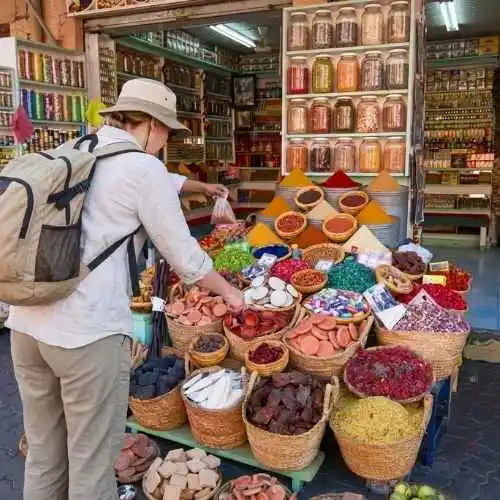
Historically, this souk was the kingdom of perfumes and spices, though copper goods have invaded it today. But you’ll still find piles of colorful spices arranged in small pyramids: golden turmeric, fiery red pepper, brown cumin, and precious saffron.
Prices typically range from $3 to $6 per kilogram depending on the spice type, but authentic Moroccan saffron can cost significantly more.
Souk Zrabia: The Carpet Kingdom
If Moroccan rugs appeal to you, this is your destination. Here, Amazigh carpets with their distinctive geometric patterns hang alongside Arab rugs in bold colors. Each design tells its own story and symbols that speak of the tribe that wove it.
What distinguishes this souk is that Moroccan women largely run it, reflecting an ancient tradition where Amazigh women handled carpet weaving in mountain villages.
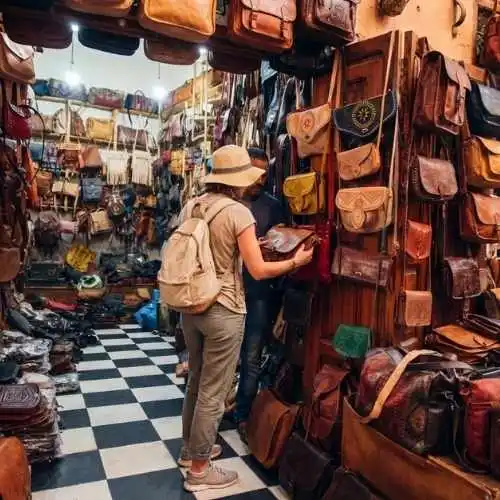
Souk Cherratine: The Scent of Leather
The smell of tanned leather leads you to this souk specializing in leather goods. Here you’ll find bags, belts, and wallets in designs ranging from traditional to contemporary. If you’re feeling adventurous, head toward the nearby tanneries in the northeastern area, where you can watch the traditional herbal tanning process—but prepare yourself for the pungent smell, and keep the sprig of mint that local guides will offer you to mask it!
Souk Smata: Slippers in Every Color
The Moroccan babouche is the famous traditional slipper worn with the Moroccan djellaba. In Souk Smata, you’ll find hundreds of models hanging in neat rows: every color of the rainbow, with designs ranging from refined classics to bold contemporary styles.
My tip: try the babouche before buying, and choose a size slightly smaller than you usually wear—the leather stretches with use.
The Gold and Jewelry Souk
In this souk, handcrafted gold and silver pieces sparkle: wide bracelets engraved with Amazigh patterns, necklaces studded with precious stones, and rings with traditional designs. If you’re looking for a special piece, this is the place—but verify the metal quality before paying any significant amount.
Read also: Honeymoon in Morocco 2026: The Lalla Laarousa & Moulay Sultan Guide
Souk Haddadine: The Rhythm of Hammers
When you hear hammers striking metal, you’ll know you’re approaching Souk Haddadine. This is where the pierced brass lanterns that have become a symbol of Moroccan décor worldwide are made. Here you can watch artisans punching intricate geometric patterns into metal sheets, and you can choose your own lantern according to your taste.
Souk Chouari: The Magic of Cedarwood
The fragrant scent of cedarwood fills this relatively quiet souk. You’ll find boxes inlaid with mother-of-pearl, carved tables, and small figurines. Some pieces are made right in front of you, so don’t hesitate to watch the craftsman at work—most of them welcome curious visitors.
Rahba Kedima: The Spice Square
Not a souk in the strict sense, but rather a small open square branching off from Souk Semmarine. Here you’ll find pyramids of colorful spices, traditional medicinal herbs, and sometimes baskets containing chameleons and small lizards used by local herbalists! The square is surrounded by small cafés with upper terraces—the perfect spot for sipping mint tea and taking a short break from the souk’s hustle.
The Art of Bargaining: How to Get a Fair Price
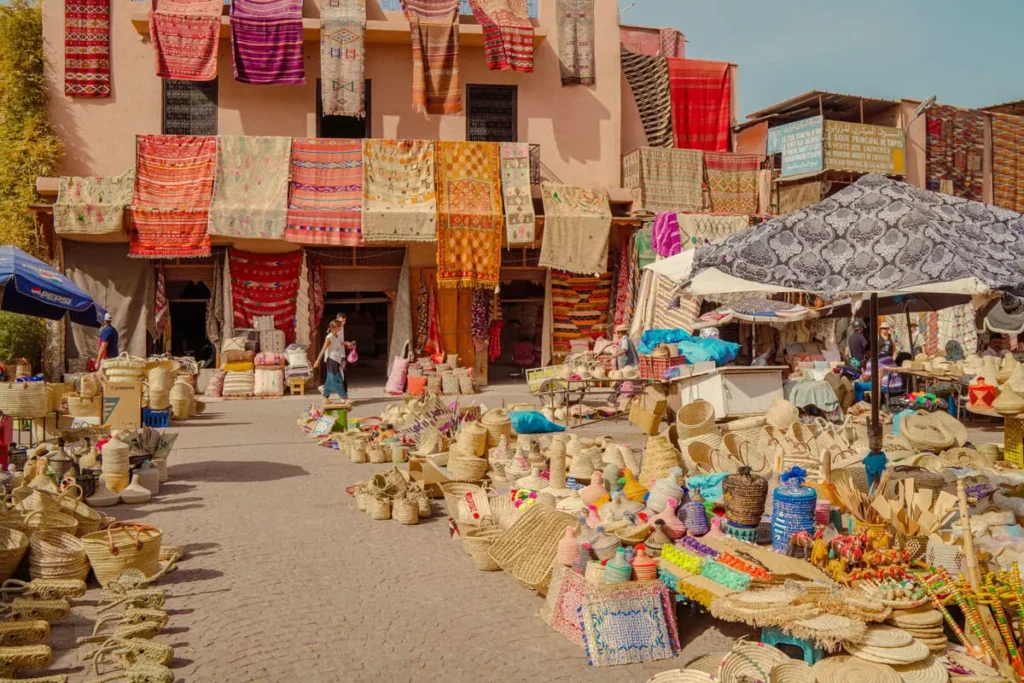
Bargaining in the Marrakech souks isn’t just a commercial transaction—it’s a complete social ritual with its own rules and customs. Here’s what you need to know to get the best prices:
Start with a smile and a kind word: A greeting in Arabic or French opens doors. “Salam alaykum” or “Bonjour” shows respect for the place and its people.
Don’t show excessive enthusiasm: When the seller notices you’re captivated by a particular item, he’ll hold firm on his price. So act calmly and show measured interest.
Know the starting point: The first price the seller mentions is usually double or triple what he actually expects to get. Start your offer at roughly half the price, then gradually meet in the middle.
Take advantage of early morning: There’s a common belief that the first customer of the day brings good luck. So sellers tend to offer better prices in the first hours after opening, around nine or ten in the morning.
The art of walking away: If you can’t agree on a price, thank the seller politely and walk away calmly. Often you’ll hear him calling after you with a new offer!
Keep cash handy: Most shops don’t accept credit cards. Prepare your money in Moroccan dirhams and keep small denominations for easier payment. And avoid showing large amounts of cash during negotiations.
Always remember: a successful bargain is one where both parties leave satisfied. Don’t shortchange the craftsman’s work, and don’t pay more than the product deserves.
Finding Your Way Through the Maze
I’ll be honest with you: you will get lost in the Marrakech souks, and that’s part of the experience! But if you do get lost, don’t worry—you’ll exit one souk only to enter another, or at least discover an alley containing a riad or historic landmark you never would have thought to look for. But if you prefer not to leave things to chance, follow these tips to avoid getting lost in the alleys of Marrakech:
Set reference points: The Koutoubia Mosque minaret is visible from most elevated spots and sits southwest of Jemaa el-Fna square. Make it your compass.
Use a digital map: Download an offline map to your phone. GPS signal can be spotty in narrow alleys, but it gives you at least a general direction.
Ask shopkeepers: If you’re completely lost, enter any shop and ask for “Jemaa el-Fna” in a friendly tone. Most merchants will happily point you in the right direction.
Beware of random guides: Young men may offer to guide you “for free,” but they’ll lead you through long routes ending at their family’s shop, expecting a tip. It’s best to politely decline.
Watch the traffic: Despite the narrow alleys, you’ll encounter motorcycles and carts loaded with goods. When you hear someone shout “Balak!” (Watch out!), step aside immediately.
Plan to exit before sunset: The inner alleys have little lighting at night, and getting lost becomes easier. It’s better to head back toward Jemaa el-Fna as evening begins, where you can enjoy the night market atmosphere.
What to Buy: The Best Finds from Marrakech Souks
What you buy depends on what appeals to your taste. But rest assured, in the Marrakech souks you’ll buy things you never planned for and didn’t even think about—until your eyes catch them and you realize they’re essential and impossible to ignore. Here are the best things to buy that I challenge you not to purchase at least two or three of:
Spices and herbs: Moroccan saffron, ras el hanout blend (a mix of more than thirty types of spices), cumin, and dried red pepper.
Leather goods: Handbags, belts, wallets, and of course traditional babouche slippers.
Carpets and rugs: Amazigh carpets with geometric patterns, or Marrakech rugs in vibrant colors.
Zellige tiles and pottery: Colorful plates, traditional tagine pots, and decorated vases.
Lanterns and lighting: Pierced brass lanterns that cast magical shadows on walls.
Argan oil: Whether for cooking or cosmetics, this famous Moroccan oil is produced exclusively in Morocco.
Jewelry and accessories: Silver pieces with Amazigh designs, or colorful beads in traditional styles.
When to Visit: Timing Your Trip
The souks are open daily from around 8:30 or 9 AM until approximately 9 PM. But there are important exceptions:
Fridays: Many shops close between 11 AM and 4 PM for Friday prayers.
During Ramadan: Some shops may open late and close early during the day, but the atmosphere comes alive after iftar and continues until late at night.
Religious holidays: The souks may close fully or partially during major celebrations.
Best shopping times: Early morning (for better prices and relative calm) or late afternoon (when crowds thin out and evening breezes refresh the atmosphere).
Practical Tips for Your Visit
Clothing: Marrakech is a tourist city par excellence, so there’s considerable freedom in choosing what to wear—except when visiting sacred places, where you’ll need to dress modestly.
Safety: The souks are generally safe, but keep your bag in front of you and watch your belongings in crowded areas. Pickpocketing can happen in any busy tourist spot.
Photography: Ask permission before photographing people. Some sellers don’t mind, while others may request a small tip in exchange for a photo.
Guided Tours or Free Exploration?
Each option has its advantages. A guided souk tour with an expert local guide saves you the trouble of getting lost, reveals hidden corners and historical information you won’t find in any guidebook. A guide can also help you negotiate and keep pushy sellers at bay.
On the other hand, free exploration gives you the freedom to stop wherever you want, and getting lost in a side alley might lead you to an unexpected discovery. There’s a special magic in finding your own way through this ancient labyrinth.
My advice: if this is your first visit, start with a short guided tour to get an overview of the souks and their layout, then return the next day to explore on your own.
Frequently Asked Questions About the Marrakech Souks
What are the Marrakech souks and why are they famous?
The Marrakech souks are a network of traditional markets located in the historic medina, organized by craft specialty—one for spices, another for leather, another for carpets, and so on. They are famous worldwide for their centuries-old architecture, their extraordinary variety of handmade goods, and the immersive cultural experience they offer visitors. The medina, including its souks, has been a UNESCO World Heritage Site since 1985.
Where are the souks in Marrakech located?
The main entrance to the souks is at Jemaa el-Fna square, from which alleys branch north and east into the medina. The best-known starting point is Souk Semmarine, which connects to all the other specialized markets.
Is bargaining expected in the Marrakesh souks?
Yes, bargaining is not only expected but is considered an integral part of the experience in Marrakesh souks. Sellers typically quote an initial price that is two to three times what they expect to receive. Starting at roughly half and negotiating from there is a common and perfectly acceptable approach.
What should I buy in the souks of Marrakech?
The souks of Marrakech are particularly renowned for handcrafted leather goods, Amazigh carpets, Moroccan spices (especially saffron and ras el hanout), argan oil, silver jewelry, and pierced brass lanterns. These are the items most representative of Moroccan craftsmanship and the ones least likely to be found at similar quality or authenticity elsewhere.
What is the best time to visit the Marrakech souks?
Early morning—between 9 and 11 AM—is generally the best time to visit. Crowds are thinner, the light in the covered alleys is at its most beautiful, and sellers are often more willing to negotiate a good price for the first sale of the day. Avoid Friday midday, when many shops close for prayers, and check for Ramadan schedules if you’re visiting during that period.
Final Thoughts
The souks of Marrakech are more than just a shopping destination—they’re a living museum telling the story of a civilization spanning a thousand years. Every alley carries whispers of ancient merchants, and every handcrafted piece holds the expertise of successive generations. When you return home carrying a Moroccan babouche or a brass lantern, you’ll also carry memories of sounds, scents, and faces—and that’s the real treasure from any journey.
Read also