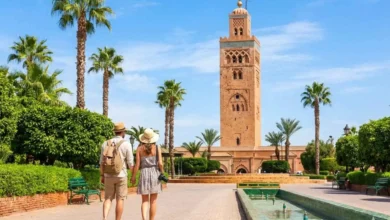
Somewhere between booking a flight and packing a bag, every American planning a trip to Morocco hits the same wall: a Google search that reads “is Morocco safe for Americans,” followed by an hour-long spiral through conflicting advice, outdated forum posts, and dramatic headlines that have nothing to do with the country itself.
Let me save you the trouble.
I’m a Moroccan journalist who has spent years covering the tourism beat — writing about this country from the inside, watching how it welcomes millions of visitors each year, and listening to Americans describe their trips in words that almost always circle back to the same confession: “I had no idea it would be this good.”
This guide isn’t a translation of a tourism brochure. It’s an honest, ground-level look at what it actually means to travel to Morocco as an American in 2026 — the history that connects our two countries, the safety picture as it really stands, the cultural codes worth knowing, and the practical details that will make your trip smoother. Whether you’re coming solo, with your partner, or with kids in tow, what follows should answer the questions you actually have.
Table of Contents
America’s Oldest Ally Isn’t Who You Think It Is
Most Americans learn about France’s role in the Revolutionary War. Almost none learn about Morocco’s.
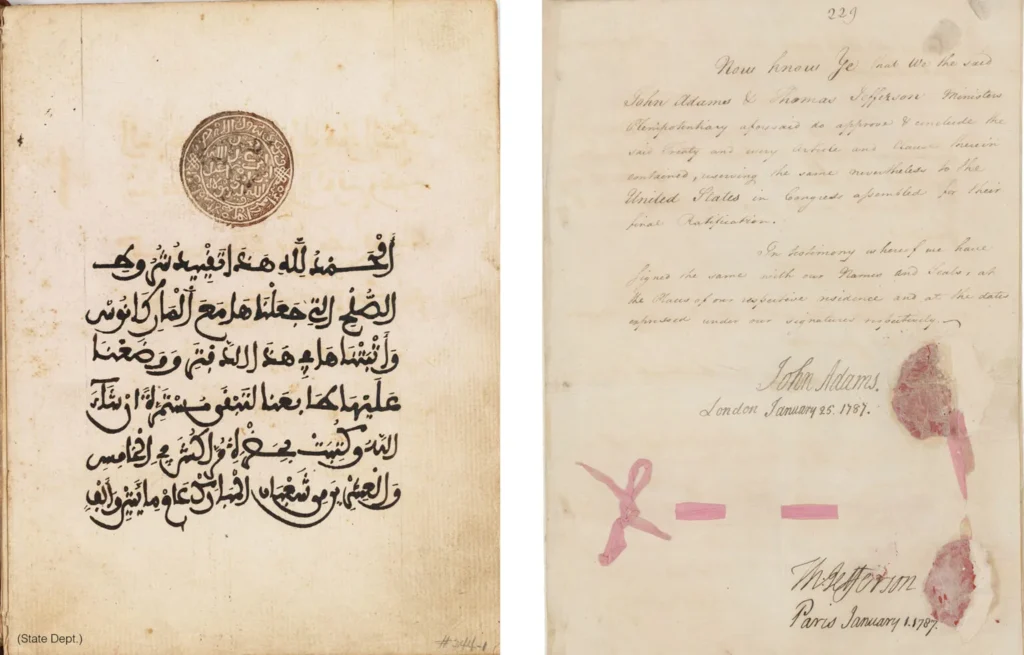
In 1777, while the Continental Congress was still struggling to get European powers to acknowledge the existence of the United States, Sultan Mohammed III of Morocco issued a declaration allowing American ships to enter Moroccan ports freely. It was the first official recognition of American sovereignty by any nation on earth.
Nine years later, Thomas Jefferson and John Adams signed the Moroccan-American Treaty of Peace and Friendship — still the longest unbroken treaty in U.S. history. Not with Britain. Not with France. With Morocco.
The Tangier American Legation, the only U.S. National Historic Landmark on foreign soil, still stands in the old medina of Tangier as living proof of this bond. And in 2004, the two countries signed a Free Trade Agreement — the only one the U.S. holds with an African nation. Military cooperation runs deep too: the annual African Lion exercises, the largest joint military drills on the continent, take place on Moroccan soil.
Is Morocco an ally of the USA? By every meaningful measure — diplomatic, economic, military — yes. And ordinary Moroccans know this history. It shapes how they see Americans. You won’t be treated as a stranger from a distant country; you’ll be received as someone from a nation that has been a friend for nearly 250 years.
Is Morocco Safe for Americans in 2026? Here’s the Unfiltered Truth
The U.S. State Department classifies Morocco at Level 2 — “Exercise Increased Caution” — the same advisory level assigned to France, Spain, Germany, and the United Kingdom. Morocco hasn’t experienced a terrorist attack since 2011, a track record that outperforms several Western European capitals over the same period.
Behind the numbers is a security infrastructure that most visitors never see but always benefit from. The BCIJ (Bureau Central d’Investigations Judiciaires), often called “Morocco’s FBI,” has earned an international reputation for intercepting threats before they materialize — and for tipping off European intelligence agencies about plots on their own soil. On the neighborhood level, a traditional system called the Moqaddem ensures that every quarter has a local authority who knows exactly what’s happening on his streets. It’s an invisible safety net woven into the social fabric.
One thing American visitors notice almost immediately: the absence of gun violence. Morocco’s firearms laws are among the strictest in the world. Walking through Marrakech’s alleys at midnight feels safer than crossing certain blocks in many major U.S. cities — and that’s not a metaphor. Morocco’s violent crime rate is significantly lower than that of the United States.
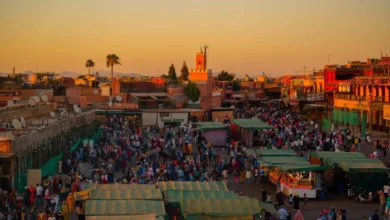
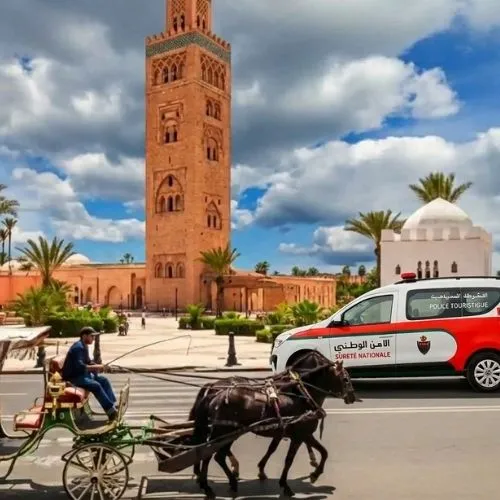
In tourist hubs like Marrakech, Fez, Agadir, and Tangier, a dedicated tourist police force patrols the medinas and major landmarks. Their job is simple: make sure visitors feel secure and get help fast if something goes wrong.
The real risks (and they’re manageable)
No honest guide pretends a country is perfect. Morocco’s challenges for tourists are real but minor:
Petty hassle: Persistent vendors in crowded souks, unofficial “guides” offering unsolicited directions, taxi drivers who forget to switch on the meter. These are annoyances, not dangers, and they fade quickly once you learn the rhythm — a firm “no, thank you” does the job.
Pickpocketing: Like Paris, Barcelona, or Rome, crowded tourist areas attract opportunists. A cross-body bag and basic awareness solve the problem.
Scams: Overpriced taxis, inflated shop prices, the occasional staged photo-op with a snake or a monkey that turns into a demand for payment. Know the game, and you won’t get played.
None of this is unique to Morocco. And none of it should keep you from going.
Is Morocco Safe for Americans Right Now? The Iran Conflict and Regional Stability
With the U.S.-Israeli military strikes on Iran unfolding in late February 2026 and Tehran retaliating by targeting countries hosting American bases in the Gulf, it’s fair to ask: does any of this touch Morocco?
The short answer is no.
Morocco sits in the far northwest corner of Africa, thousands of miles from the Persian Gulf. There are no U.S. military bases on Moroccan territory. There is no geopolitical reason for Morocco to be drawn into this conflict. Flights to and from the country operate normally, daily life hasn’t skipped a beat, and the security situation remains unchanged.
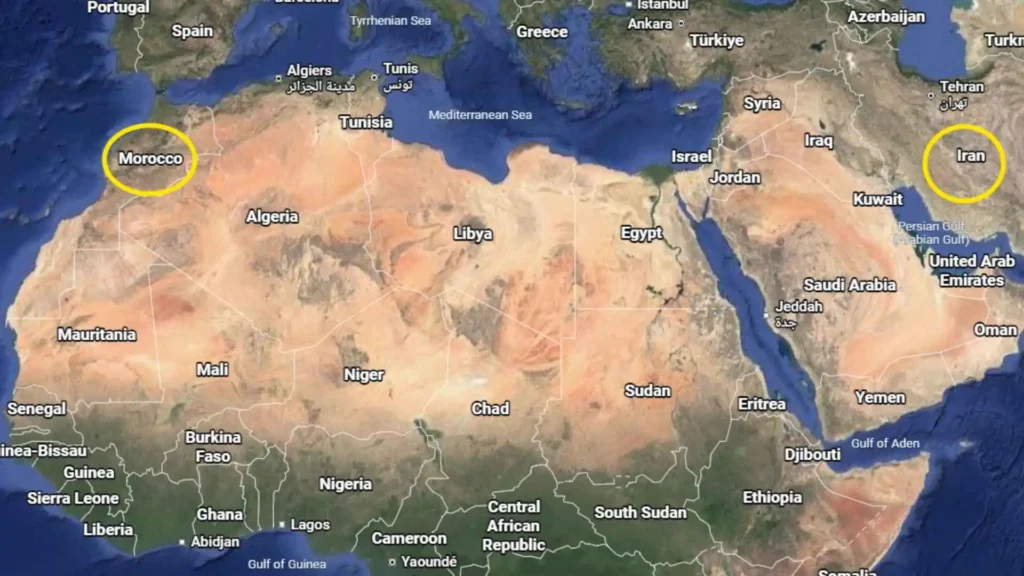
If you’re looking for a destination that’s genuinely removed from the current Middle Eastern tensions — geographically, politically, and militarily — Morocco is one of the safest choices you can make right now.
A note on current events (February- March 2026): With the American-Israeli war with Iran reshaping the security landscape across the Middle East, the State Department urged American citizens to leave 12 countries in the region immediately. Morocco is not on that list — nor has it ever been. The kingdom sits in northwest Africa, thousands of miles from the conflict zone, with no U.S. military bases on its soil. If anything, this moment underscores just how far removed Morocco is from the region’s turbulence.
Is Morocco Safe for American Women Traveling Solo?
Women make up a growing share of American visitors to Morocco, and most return with overwhelmingly positive experiences. That said, it’s worth being practical.
In cities like Marrakech and Fez, you may encounter verbal attention from men — catcalling, comments, or persistent attempts at conversation. It’s uncomfortable, not dangerous, and it decreases significantly when you dress modestly by local standards (shoulders and knees covered, loose-fitting clothes). Outside tourist zones and in rural areas, conservative dress isn’t just appreciated — it dramatically improves the quality of your interactions.
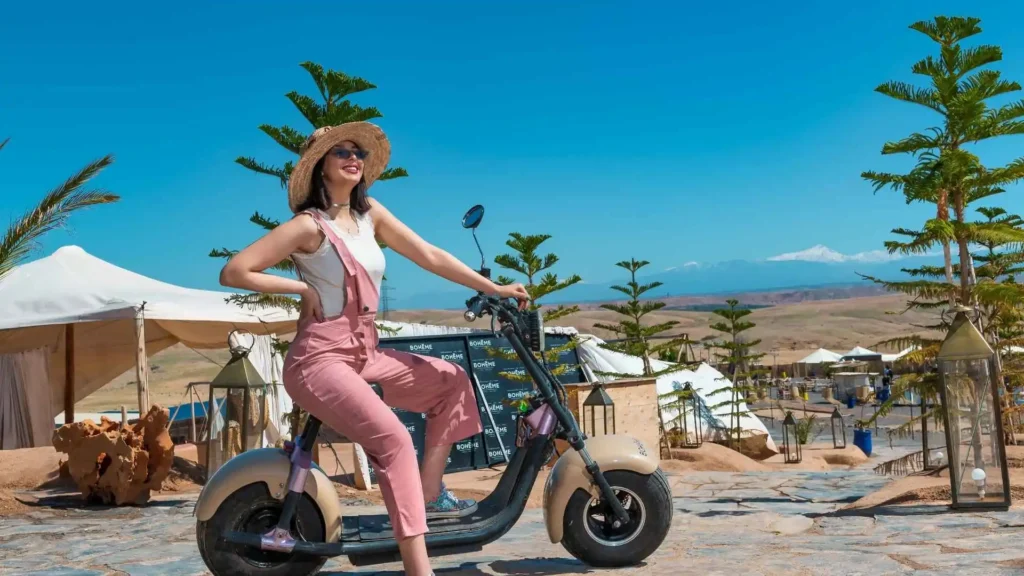
Travel in pairs or groups after dark in unfamiliar neighborhoods. Stick to well-lit, populated streets. And remember: Moroccan women navigate these same dynamics every day. You’re not entering hostile territory; you’re entering a society with different social codes. Understanding them is the key to a smooth trip.
The Palestine Question: Will Americans Face Hostility?
Moroccans care deeply about the Palestinian cause. Mass solidarity marches fill the streets of Rabat, Casablanca, and Tangier during every escalation. Criticism of Washington’s support for Israel is vocal, widespread, and unfiltered.
And yet — here’s what matters for the American traveler — this criticism is directed squarely at the White House, never at the tourist sitting in a café. Moroccans draw a sharp, instinctive line between a government’s foreign policy and the individual citizen standing in front of them. Many know that millions of Americans disagree with their own administration. That awareness runs deep.
If someone brings up politics over tea — and they might, because Moroccans genuinely love a good debate — the tone will be curious, not hostile. You can engage, share your perspective, or simply change the subject. In every case, the cultural rule holds firm: you are a guest (Dayf), and the guest is sacred.
“Karam”: Why a Stranger Might Invite You Home for Tea
At some point during your trip, a shopkeeper you’ve never met will wave you over and say: “Atay!” — the Moroccan word for tea. No agenda. No sales pitch. Just a glass of mint tea and a conversation.
Moroccan hospitality — Karam — isn’t a service industry concept. It’s a deeply rooted cultural and religious value. The mint tea ritual is an act of trust-building; accepting it signals mutual respect. Sitting around a shared plate of couscous on a Friday afternoon — something that can happen if you show even the slightest warmth — dissolves every cultural barrier in the room.
These moments won’t make it into any guidebook’s table of contents. But they’re the reason Americans come home and tell everyone they know to visit Morocco.
Is Morocco Friendly to American Tourists? What the Language Shift Tells You
Morocco is a multilingual country by nature: Arabic and Amazigh (Berber) are official languages, French dominates business and administration. But the real story of the last decade is the explosive rise of English among young Moroccans.
Over 40% of Moroccan youth now consider English the most important language to learn — ahead of French by a wide margin. In tourist cities, most hotel staff, restaurant servers, and shop owners speak functional to fluent English. Outside those circles, French picks up the slack. In remote villages, a translation app on your phone fills the gap.
Here’s a detail that matters: English carries no colonial baggage in Morocco. Unlike French, which is tied to decades of colonial history, English is seen as a neutral, aspirational language. Young Moroccans learn it because they want to — and they practice it enthusiastically on American visitors. That linguistic enthusiasm is one more reason why Morocco is friendly to American tourists in ways you’ll feel from day one.
You don’t need a guide for language reasons, but a licensed local guide in labyrinthine cities like Fez or Marrakech adds depth that no map can provide.
What Currency Do Tourists Use in Morocco? Money, Cards, and Budgeting
The Moroccan dirham (MAD) is the local currency, and it’s the only one accepted in shops, restaurants, and taxis.
Bring U.S. dollars and exchange them after you land — but skip the airport bureau de change, where rates are worse. City-center exchange offices offer significantly better deals. Convert in batches rather than all at once.
Morocco runs on cash. Credit cards work in upscale hotels, chain restaurants, and some larger shops, but the medina, the taxi, and the street food stall all expect bills and coins. American debit cards work at some ATMs but often incur steep fees — treat your card as a backup plan, not your primary payment method.
Budget reality check: Morocco isn’t uniformly cheap. Marrakech and Casablanca can rival mid-range European city prices, especially in tourist-facing establishments. Step outside the tourist bubble, however, and your dollar stretches considerably further.
Read also: “Pay Without Cash”: Morocco’s Bold Bet on a Digital Tourism Future
Getting Around Morocco: Trains, Taxis, and the Apps That Save You
Between cities
Morocco’s rail network is comfortable and reliable. The Al Boraq high-speed train (TGV) connects Tangier to Casablanca in just two hours. Standard lines link Casablanca to Marrakech, Rabat, Fez, and Meknes. You can buy tickets online or at the station.
For longer distances — say, Marrakech to Tangier — budget airlines like Ryanair offer domestic flights at remarkably low fares.
Inside cities
Small taxis (Petit Taxis) are everywhere. One non-negotiable rule: insist the driver turn on the meter (compteur) before the car moves. If he refuses, get out and flag another. It takes thirty seconds.
The smarter option: ride-hailing apps like InDrive or Careem lock in the price before you get in, eliminating the guesswork and the potential for overcharging.
Is Morocco Safe for Americans with Kids?
Moroccans adore children — this is a family-oriented society where kids are welcomed, fussed over, and handed extra pastries without anyone asking. Traveling with children in Morocco often improves your experience rather than complicating it, because locals go out of their way to help families.
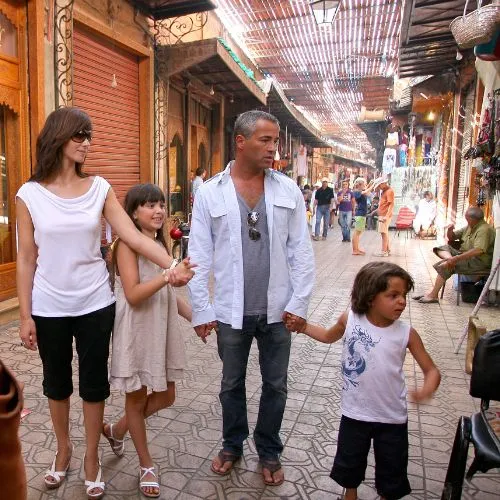
Practical precautions: keep a close eye on young children in the chaotic medinas where narrow alleys twist in every direction. Avoid tap water — bottled water is cheap and everywhere. Pack loperamide and rehydration salts in case of traveler’s stomach. And make sure routine vaccinations are current; the CDC also recommends Hepatitis A and Typhoid vaccines for Morocco.
How Many Tourists Visit Morocco Each Year? The Numbers Behind the Confidence
In 2025, Morocco recorded a record 19.8 million tourist arrivals — a 14% jump from the previous year — generating over $13 billion in revenue. That makes Morocco the most-visited country in Africa, ahead of Egypt. The government is targeting 26 million visitors by 2030, bolstered by co-hosting the FIFA World Cup that year.
What these numbers mean for you: the tourism infrastructure — hotels, transport, dining, security — is scaling up constantly. You’re not pioneering uncharted territory; you’re visiting a country with decades of experience hosting millions of international guests.
Laws in Morocco for Tourists from the USA: What You Need to Know
Visa: U.S. citizens enter Morocco visa-free for stays up to 90 days. Your passport must be valid for at least six months beyond your arrival date.
Alcohol: Available in licensed hotels, restaurants, bars, and some supermarkets. Drinking in public spaces is illegal.
Dress code: No law mandates specific clothing for tourists, but dressing modestly — especially in villages and outside resort areas — earns genuine respect and improves your interactions.
Photography: Always ask before photographing people. This isn’t just etiquette; ignoring it creates awkward confrontations.
Cannabis: Despite its visible cultivation in parts of the north, possession and consumption are illegal. Decline any offers from strangers — some are setups.
LGBTQ+ travelers: Homosexuality is technically illegal in Morocco. In practice, many LGBTQ+ tourists visit without incident by being discreet. Avoid public displays of affection and research LGBTQ+-friendly accommodations in advance.
Read also: Travelling to Morocco as an Unmarried Couple in 2026: Law vs Reality Explained
Is Morocco Safe for Christians and Other Faiths?
Morocco’s constitution explicitly recognizes the country’s identity as a blend of Arab-Islamic, Amazigh, Saharan, African, Andalusian, Hebrew, and Mediterranean influences. That constitutional acknowledgment of the Jewish component — rare in the region — sets the tone for genuine religious tolerance.
Churches operate freely in Moroccan cities. Synagogues are preserved as heritage sites — and some remain active. Christmas is celebrated in tourist areas. No one will question your faith or expect you to observe Islamic practices.
Is Morocco safe for Christians? Yes. Is it safe for Jewish travelers? Yes. The country’s pluralistic identity isn’t a talking point; it’s built into the legal framework and the social reality.
Frequently Asked Questions
Is it safe for Americans to travel to Morocco right now?
Yes. Despite regional tensions related to the Iran conflict in February-March 2026, Morocco is geographically and politically distant from the affected zones. No travel disruptions have been reported, and the State Department advisory remains at Level 2 — the same as Western Europe.
What is the US State Department travel advisory Morocco level 2026?
The State Department hasn’t issued an updated advisory specifically for 2026 yet. The current classification dates from 2025 — but here’s the thing: Morocco’s Level 2 rating (“Exercise Increased Caution”) has remained unchanged for years, holding steady at the same tier assigned to France, Spain, Germany, and the United Kingdom. There is no indication whatsoever that this will change. Morocco carries the exact same risk rating as the most visited countries in Western Europe, and the country hasn’t experienced a terrorist attack since 2011 — a track record that outperforms several European capitals over the same period.
Is Morocco safe for white tourists?
Morocco welcomes visitors of all backgrounds. Lighter-skinned tourists may attract more vendor attention in busy markets — not hostility, just commercial interest. Basic street smarts apply equally regardless of ethnicity.
Why did Morocco recognize the United States?
Sultan Mohammed III saw strategic and commercial advantage in befriending the young American republic in 1777. The resulting alliance has endured for nearly 250 years, making it the longest unbroken diplomatic friendship in U.S. history.
Is Morocco safe to live in for Americans?
A growing community of American expats — particularly in Marrakech, Rabat, Essaouira, and Tangier — would say yes. Cost of living is lower than most U.S. cities, healthcare is affordable, and quality of life is high. The main adjustment is cultural, not safety-related.
Is Morocco safe from ISIS?
Morocco’s counter-terrorism apparatus is among the most effective in the world. The BCIJ has dismantled dozens of cells and regularly shares intelligence with Western agencies. No ISIS-linked attack has occurred on Moroccan soil, and the country’s security posture remains proactive.
Before You Pack: What I Wish Every American Visitor Knew
Bargaining is a social sport, not a confrontation. The first price is never the real price. Take your time, enjoy the back-and-forth, and walk away without guilt if the number doesn’t work. The vendor expects it.
Eat where Moroccans eat. Hotel restaurants serve safe, predictable food. The real Morocco is in the hole-in-the-wall joint where the tagine has been slow-cooking since morning and the grilled sardines come straight off the charcoal. Especially in Essaouira — don’t skip the sardines.
Skip Casablanca if time is short. It’s a business city with limited tourist appeal. Redirect those days to Essaouira, Chefchaouen, or Fez — you won’t regret it.
Handle the persistent street hustlers with a smile. A confident “no, thank you” ends the interaction. Don’t ignore people rudely, don’t engage in arguments. They know what “no” means when you say it like you mean it.
Learn one word: “Choukran.” It means “thank you” in Moroccan Arabic, and it opens doors you didn’t know existed.
Respect earns respect. Dress modestly in villages, ask permission before photographing people, take off your shoes when entering a home. These small gestures transform you from a tourist into a guest — and in Morocco, the guest holds a sacred place.
The Bottom Line
Morocco isn’t a country that tolerates tourists. It’s a country that genuinely wants them there — backed by 250 years of diplomatic friendship with the United States, a security infrastructure that outperforms much of Europe, a hospitality culture that turns strangers into friends over a glass of mint tea, and a young population that speaks your language and is eager to practice it.
Is Morocco safe for Americans? The 19.8 million people who visited in 2025 would tell you the answer. The only real risk is falling so hard for the place that you start looking at return flights before you’ve even left.
Have you visited Morocco? Share your experience in the comments.
Read also: