In the world of investing, the ones who win big are the ones who see what others miss — the ones with a hawk’s eye for opportunity before the crowd catches on.
And right now, anyone scanning Africa’s investment landscape with that kind of vision cannot ignore Morocco — a country that has turned its tourism ambitions into a full-blown economic engine, drawing serious capital from investors across Europe, the Gulf, and beyond. Tourism investment in Morocco isn’t a speculative play. It’s a strategic move backed by hard numbers, government muscle, and a track record that speaks for itself.
In 2025 alone, the Kingdom welcomed nearly 20 million tourists — a 14% jump over 2024 and a figure that places Morocco firmly at the top of Africa and the Arab world’s tourism rankings.
But behind these headline numbers lies a deeper story. This is a nation that has deliberately engineered tourism into a cornerstone industry — one designed to drive development and open the door for capital seeking stability, solid returns, and long-term growth.
The window is open. Here’s why the smart money is moving toward Morocco.
Table of Contents
Why Tourism Investment in Morocco Deserves Your Attention
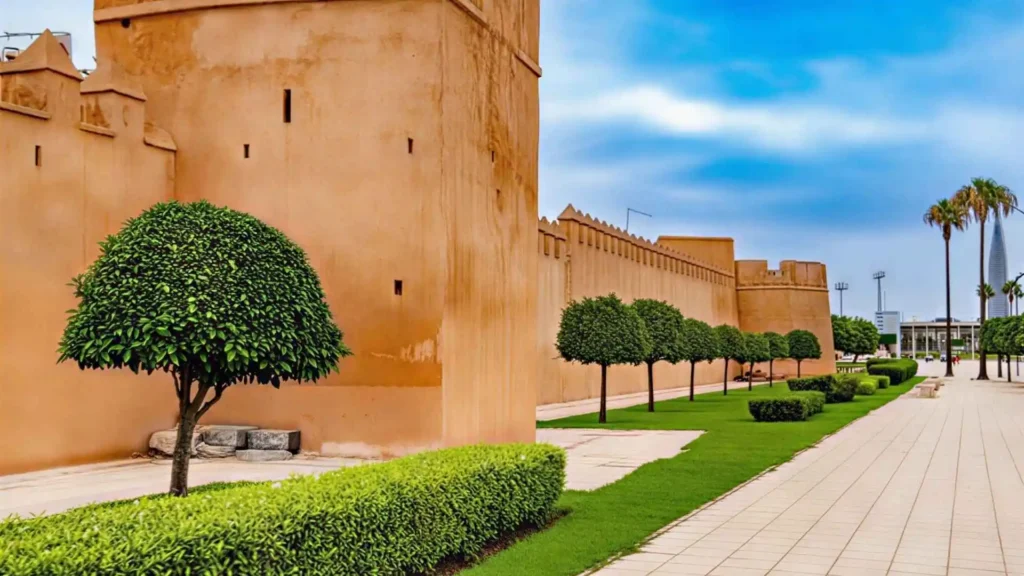
Let’s start with the fundamentals. Morocco is far more than postcard-worthy beaches and desert sunsets. It’s a diversified, modern economy with sustained growth and the kind of monetary stability that makes international investors take notice.
The country is home to 36.8 million people, with the population projected to reach 43 million by 2050 — a balanced demographic trajectory that signals a growing domestic market. But the real story is structural transformation. Morocco has shifted from an agriculture-dependent economy to one anchored in advanced manufacturing. Today, the Kingdom leads Africa in automobile production and has built competitive footholds in aerospace, pharmaceuticals, and high-end services.
What truly sets Morocco apart is its political and social stability — the bedrock for any long-term investment. On the World Bank’s Ease of Doing Business Index for 2020, Morocco ranked 53rd globally out of 190 countries, up from 76th in 2010. That improvement wasn’t accidental. It came from serious reforms that slashed business creation timelines from 12 days to just 9, cut costs, and stripped away bureaucratic red tape.
Foreign Investment in Morocco: The Numbers Tell the Story
If you want to gauge international confidence in a country, follow the money. Between 2007 and 2023, Morocco attracted $60 billion in foreign direct investment — a figure that reflects deep, sustained trust in the country’s economic trajectory.
France leads the pack with a cumulative $20.6 billion, followed by the United Arab Emirates at $13.6 billion and Spain at $5.4 billion. These aren’t legacy numbers gathering dust. In 2023 alone, France invested $1.1 billion, the UAE injected $339.4 million, the United Kingdom contributed $258.7 million, and Spain added $254.8 million.
What’s particularly compelling for the tourism industry in Morocco is how the sector performs in attracting this capital. Tourism ranks as the third-largest sector for FDI in the country, capturing 9.1% of total foreign direct investment flows between 2007 and 2023.
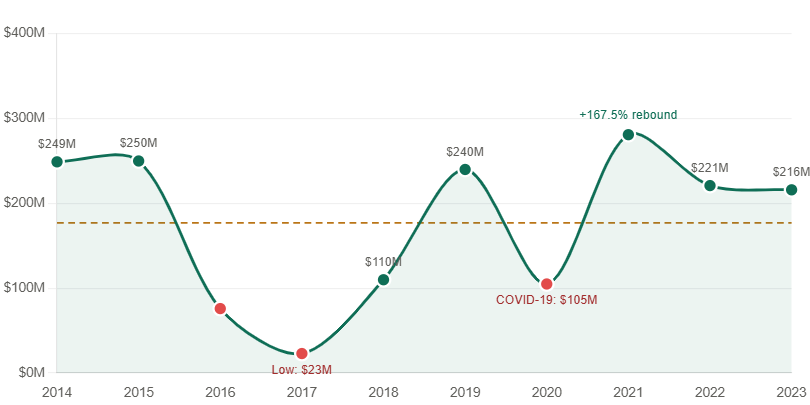
Yes, COVID-19 hit the sector hard — investment dropped 58% in 2020. But what happened next was remarkable. In 2021, tourism FDI surged 167.5% compared to 2020, actually surpassing pre-pandemic 2019 levels by 12.2%. That kind of rebound doesn’t happen by accident. It reflects both the sector’s resilience and investor confidence in its future. Average annual tourism investment over the 2007–2023 period stood at $355.2 million, with $220.6 million recorded in 2022 and $216.2 million in 2023.
Morocco’s Green Economy: Investing in the Future
You can’t talk about modern Morocco without talking about its aggressive push into renewable energy. The Kingdom isn’t content to be a leading tourism destination alone — it’s positioning itself as a regional and global leader in the transition to a green economy, targeting 52% renewable energy in its power mix by 2030 through solar, wind, and hydroelectric sources.
This isn’t greenwashing. It’s economic strategy — one that makes Morocco among the lowest carbon-emitting countries in the world. For tourism investors, it opens up serious opportunities in sustainable tourism, green hotels, and eco-friendly resorts — segments seeing surging demand from environmentally conscious travelers worldwide.
A Rich Cultural and Natural Heritage
UNESCO Sites and Centuries of Civilization
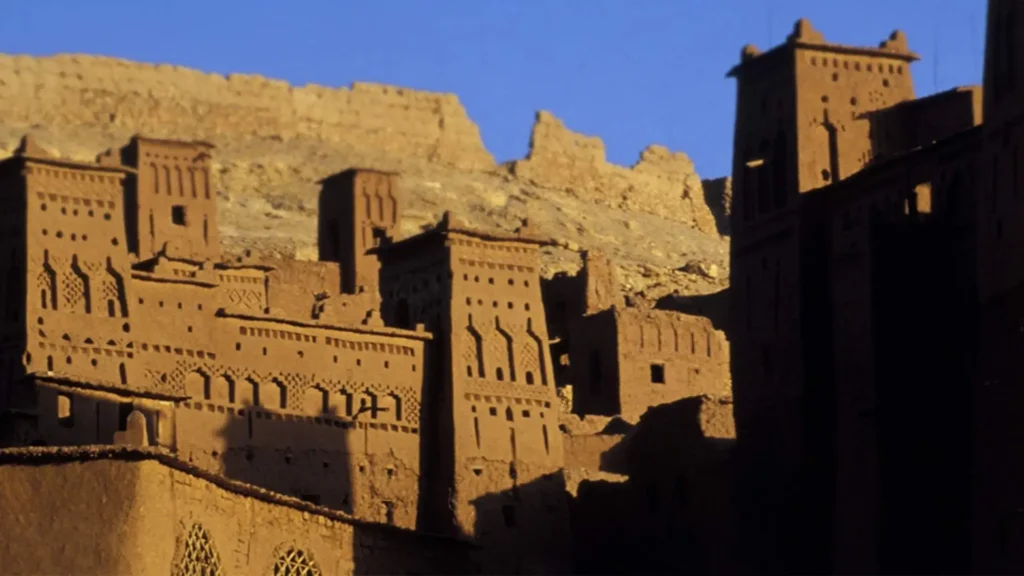
Morocco sits at the crossroads of civilizations, wrapped in a warm Mediterranean climate. Its landscapes span from the Sahara to the Atlas Mountains to the Atlantic coastline, offering visitors a remarkable range of natural wonders.
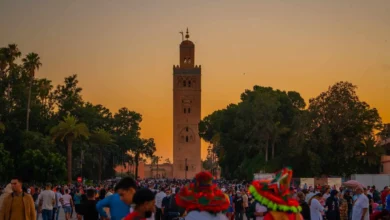
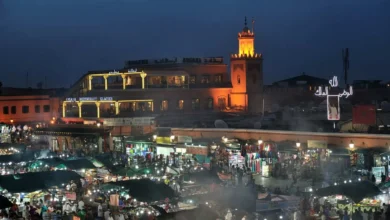
The Kingdom holds 9 UNESCO World Heritage Sites, including the ancient Roman ruins of Volubilis, the historic city of Meknes founded in 1061 AD, the iconic Kasbah of Ait Ben Haddou, the medieval medina of Fes, the legendary medina of Marrakech with its Koutoubia Mosque and Jemaa el-Fna square, the port city of Essaouira, the Andalusian-influenced Tetouan, the Portuguese city of El Jadida, and Rabat — one of Africa’s most ambitious 20th-century urban projects.
Exceptional Natural Wealth
With over 3,500 kilometers of coastline and 11 national parks, Morocco is purpose-built for diversified tourism — from beach resorts and mountain lodges to desert expeditions and historic city tours.
Tourism Development in Morocco: A Strategic Roadmap
Morocco didn’t leave its tourism success to chance. The Kingdom laid out clear, target-driven strategic plans — and then executed them.
In 2010, Morocco launched its Vision 2020 for tourism, an ambitious blueprint that delivered real results. The plan wasn’t just numbers on paper. It drove massive infrastructure investment — new airports, modernized terminals, modern highways, and diversified tourism facilities. The core objective was to expand the tourism offer beyond the traditional hubs of Marrakech and Casablanca into regions rich with untapped potential. Tax incentives were rolled out, business procedures streamlined. By 2019, Morocco welcomed a then-record 12.9 million visitors.
But Moroccan ambition doesn’t plateau. In 2022, after recovering from COVID-19, the government launched its Tourism Roadmap 2023–2026, setting even bolder targets: 17.5 million tourists by 2026, 120 billion dirhams in foreign exchange revenue, and 200,000 new jobs (80,000 direct and 120,000 indirect).
What distinguishes the new roadmap is its focus on quality, not just quantity. It emphasizes stronger air connectivity, new and diversified tourism products, upgraded hotel infrastructure, and a competitive investment charter offering incentives of up to 30% cash rebates.
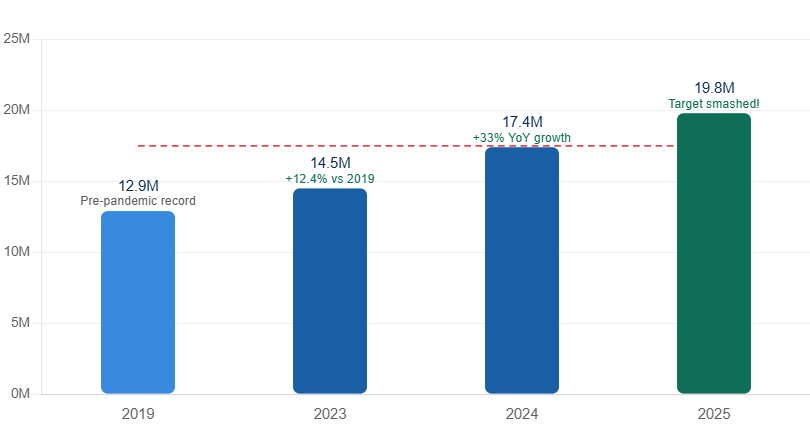
The results came fast. Morocco welcomed 14.5 million tourists in 2023, 17.4 million in 2024, and approximately 20 million in 2025 — blowing past the 2026 target a full year ahead of schedule.
The roadmap identified nine priority tourism segments, each targeting specific traveler profiles:
- Ocean Waves — water sports and surf tourism
- Nature & Hiking — green and adventure tourism
- City Breaks — short urban getaways
- Beach & Sun — classic seaside vacations
- Desert & Oasis Adventures — Saharan expeditions
- Business Tourism — conferences and professional events
- Cultural Tours — immersive heritage experiences
- Domestic Tourism — promoting travel among Moroccans
- Leisure Tourism — entertainment infrastructure and theme parks
The Investment Charter: How Morocco Funds Tourism Projects
Morocco’s Investment Charter is tailor-made for the tourism sector, built on three interconnected pillars that cover every phase of the investment cycle.
Pillar One: Direct Financial Support
The financial incentives are structured to fit projects of all sizes. For investments exceeding 50 million dirhams that create at least 50 permanent jobs — or those creating 150 permanent jobs regardless of investment size — a primary support mechanism delivers substantial financial benefits. Strategic mega-projects valued at 2 billion dirhams or more with significant economic and employment impact qualify for an enhanced support track. Small and medium enterprises get their own dedicated mechanism designed for their specific needs.
The headline number: up to 30% cash rebate on investment value. This breaks down into a regional bonus (5% to 15% depending on project location) and a sector bonus (an additional 5% for tourism projects, including hospitality, entertainment, and food service). That means an investor building a resort in a priority zone could pocket incentives worth 20% of their total investment.
Pillar Two: A Better Business Environment
Beyond financial incentives, the government has targeted seven priority areas for improvement: simplified administrative procedures, easier access to suitable land, enhanced logistics and transport, competitive green energy access, specialized workforce training, support for R&D and advanced technologies, and diversified financing options.
Pillar Three: Clear Governance
A unified institutional framework ensures transparency and efficiency. The Ministry of Investment oversees policy. The Moroccan Agency for Investment and Export Development (AMDIE) manages investment agreements. Regional Investment Centers serve as one-stop shops where investors handle all procedures in a single location — cutting red tape and saving time.
Morocco’s Tax System: Competitive, Transparent, and Investor-Friendly
The standard VAT rate is 20%, but the tourism sector benefits from a reduced rate of just 10% on accommodation, restaurant services, and hotel or resort property rentals.
For corporate tax, hotel companies and tourism property management firms enjoy full exemption during their first five years of export activity — a golden window for establishing and stabilizing a project. After that, a reduced 20% rate applies to net profits between 1 million and 100 million dirhams.
Personal income tax follows a progressive scale from 0% to 38%, with full exemption for annual incomes below 30,000 dirhams.
Additional sector-specific perks make the deal even sweeter. Bare land designated for hotel construction is fully exempt from registration fees, provided the buyer commits to building the hotel within six years of purchase. Tourist taxes and tourism promotion levies are nominal — ranging from 2 to 30 dirhams per person depending on establishment category — and are paid by guests, not investors. Children under 18 are exempt, encouraging family tourism.
Morocco’s Infrastructure: Built for Growth
No tourism investment succeeds without strong infrastructure, and Morocco has spent the past two decades building one of Africa’s most modern networks.
Air connectivity is extensive — 29 airports, 15 of them international, with major hubs in Casablanca, Marrakech, Agadir, Fes, Tangier, and Rabat serving routes across Europe, Africa, and the Middle East.
Seaports are equally formidable. Tanger Med ranks among the largest ports in the Mediterranean and all of Africa. And Morocco isn’t done building. Nador West Med — the country’s second deep-water port on the Mediterranean — is expected to begin operations in late 2026. The $5.6 billion mega-project will feature 5.4 kilometers of breakwaters, four kilometers of quays, and four power generation stations. Additional ports in Casablanca, El Jadida, and Agadir provide advanced shipping and logistics.
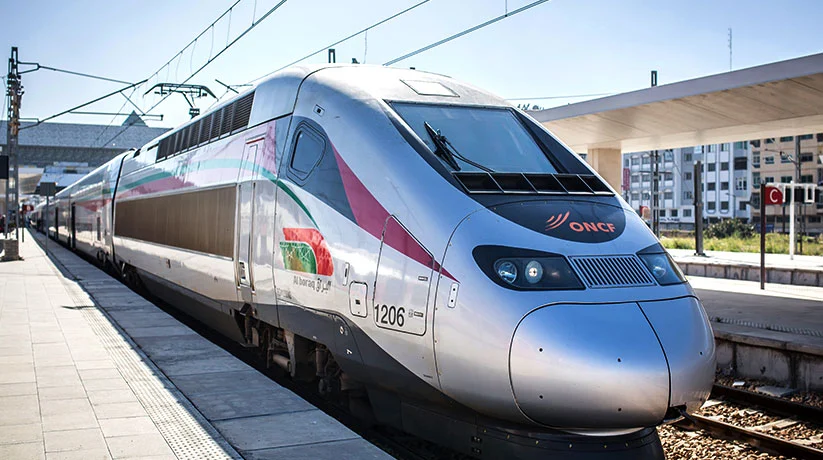
Rail is a standout. Morocco operates Africa and the Arab world’s first high-speed train — the Al Boraq TGV connecting Tangier to Casablanca at speeds up to 320 km/h, currently serving four stations: Tangier, Kenitra, Rabat, and Casablanca. The Tangier-to-Casablanca journey takes just two hours and ten minutes.
Highways span the country, connecting every major city and region. Continuous road investment ensures accessibility even to remote tourist sites.
Digital infrastructure hasn’t been overlooked either. Morocco has rolled out 5G connectivity, and high-speed internet coverage is widespread — essential for modern tourism operations, digital marketing, and delivering tech-enabled guest experiences.
SMIT: Morocco’s Tourism Investment Partner
Investors entering Morocco’s tourism sector don’t go it alone. The Moroccan Tourism Engineering Company (SMIT) — also known as the Moroccan Agency for Tourism Development — provides end-to-end support from initial concept to operational launch. SMIT also connects investors with Morocco’s tourism project bank, a portfolio of ready-to-go investment opportunities across the country’s regions.
SMIT specializes in tourism engineering — the scientific planning and design of tourism projects. The agency helps with pre-feasibility studies, market analysis, site selection, and building robust business plans. It also facilitates access to suitable land, a critical step in any hotel or resort development.
What sets SMIT apart is its ability to connect investors with international operators, developers, and potential partners through networking events and matchmaking initiatives. The agency works across every asset class — from large-scale luxury beach resorts to intimate mountain lodges, golf courses, waterparks, and cultural attractions. Its investor base ranges from sovereign wealth funds and private equity firms to SMEs and development finance institutions.
Morocco: A Gateway to Global Markets
One of Morocco’s most powerful competitive advantages is its geographic position and its vast network of trade agreements. The Kingdom sits just 14 kilometers from Europe across the Strait of Gibraltar — Africa’s natural bridge to the continent’s largest consumer market.
Morocco has signed free trade agreements with 62 countries, providing preferential access to markets exceeding one billion consumers. These agreements cover the entire European Union, the United States, numerous African nations through the African Continental Free Trade Area, Gulf states, Turkey, Egypt, and more.
For tourism-related businesses — think artisan manufacturing, local products, or cross-border tourism services — this network delivers an enormous competitive edge. European companies can use Morocco as a launchpad into Africa’s booming markets, while African firms gain streamlined access to European and American consumers.
FIFA World Cup 2030: A Once-in-a-Generation Opportunity
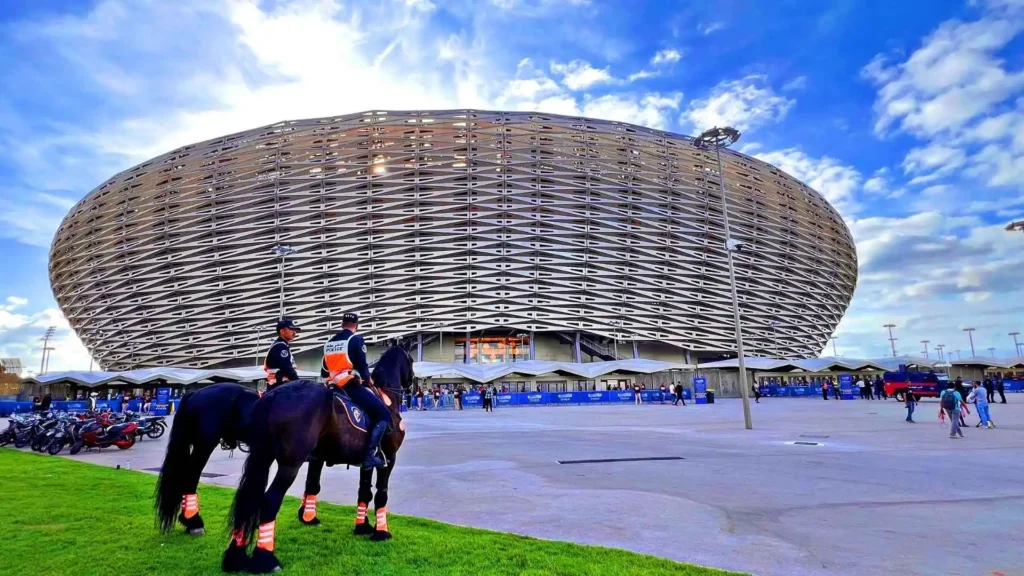
If there’s one event capable of transforming a country’s tourism trajectory overnight, it’s hosting the FIFA World Cup. Morocco, alongside Spain and Portugal, will co-host the 2030 edition — the biggest sporting event on the planet.
This isn’t a few weeks of football. It’s a generational opportunity with impacts that will last decades. Millions of visitors will flood in during the tournament, but the real prize is the long-term effect on Morocco’s global brand as a tourism destination. The media exposure alone — reaching billions of viewers worldwide — will function as a promotional campaign no advertising budget could ever match.
The event is already driving massive infrastructure investment: modern stadiums, new hotels, upgraded transport networks, and expanded entertainment facilities. All of it will remain long after the final whistle, benefiting the tourism industry for years to come.
For investors with foresight, now is the moment to enter the market — before prices climb and competition intensifies as the tournament approaches.
How Morocco Stacks Up: Global Competitiveness
The World Economic Forum’s Travel and Tourism Development Index for 2024 ranks Morocco 82nd globally out of 119 countries — placing it among the top six in Africa.
But the headline ranking undersells Morocco’s real strengths. In cultural resources, Morocco ranks 29th globally — a remarkable achievement reflecting the Kingdom’s deep civilizational heritage. In non-leisure activity appeal (business travel, conferences, cultural events), Morocco ranks 40th. Tourism openness comes in at 50th, and safety and security at 56th — both critical factors in traveler decision-making.
These rankings aren’t theoretical. They’re reflected in the behavior of the world’s biggest hotel brands. Accor has signed on for a Fairmont Tazi Palace in Tangier. Barceló announced a $46 million investment in new Moroccan properties. Hilton is opening a Canopy Tangier Bay. Four Seasons has launched a luxury property in Rabat. When global chains of this caliber expand into a market, it’s because their research confirms real opportunity and attractive returns.
Morocco Tourism Statistics: A Recovery Story for the Books
Before the pandemic, Morocco welcomed 12.9 million tourists in 2019 — a number celebrated as a major milestone. COVID devastated global tourism, and Morocco was no exception. But instead of standing still, the Kingdom used the pause to replan and prepare.
In 2023, Morocco surpassed pre-pandemic levels with 14.5 million international arrivals — a 12.4% increase over 2019. In the first seven months of 2024 alone, tourist numbers jumped 33% year-over-year. By year’s end, the total hit 17.4 million. And in 2025, Morocco reached 19.8 million — obliterating the government’s own target of 17.5 million set for 2026.
This acceleration isn’t luck. It’s the direct result of massive infrastructure investment, economic reform, targeted incentives, aggressive marketing, and improved service quality — all feeding a virtuous cycle where more tourists attract more investment, which attracts more tourists.
The Bottom Line: Why the Opportunity Is Now
Morocco offers a rare combination that few markets in the world can match. Political and economic stability provide a safe harbor for long-term capital — no small thing in a region that sees its share of turbulence. Financial incentives reaching 30% cash rebates, generous tax exemptions, and reduced rates dramatically improve projected returns. World-class infrastructure — from major international airports to a high-speed rail network — supports operations and makes tourist access effortless.
A rich cultural heritage and exceptional geographic diversity guarantee a steady flow of visitors seeking everything from beach resorts to mountain treks to Saharan adventures to historic medinas. A strategic geographic position — minutes from Europe and at the heart of global trade routes — makes Morocco accessible from virtually anywhere. And government policies that place tourism at the top of national priorities ensure continued support and development for years to come.
Tourism investment in Morocco represents a strategic opportunity that no serious investor can afford to overlook. The opportunities are available now. The timing is right. The conditions are favorable. And the future looks as bright as the Moroccan sun.
Frequently Asked Questions About Investing in Morocco’s Tourism Sector
What financial incentives does Morocco offer tourism investors?
Through its Investment Charter, Morocco provides incentives of up to 30% cash rebate on investment value. This includes regional bonuses of 5% to 15% based on location, plus a 5% sector-specific bonus for tourism. Hotel companies receive full corporate tax exemption for their first five years of export activity, followed by a reduced 20% rate. VAT on accommodation and restaurant services is reduced to 10%.
Which Moroccan cities offer the best opportunities for hotel and tourism property investment?
The strongest opportunities span several cities: Marrakech (leading cultural and heritage destination), Casablanca (economic hub and business gateway), Agadir (beach tourism capital), Fes (cultural and spiritual capital), Tangier (gateway to Europe with strategic positioning), Rabat (political capital blending modernity and history), and emerging destinations like Essaouira, Ouarzazate, and Meknes with significant untapped potential.
What procedures are required to launch a tourism project in Morocco?
The process has been streamlined through Regional Investment Centers (CRI) that function as one-stop shops. Investors need a feasibility study and business plan, approval from SMIT for major projects, registration with the relevant CRI, construction and operating permits, and tax and social registration. Business creation timelines have been cut from 12 days to just 9. For detailed guidance, investors can contact SMIT directly through its website or offices, which also provide access to Morocco’s tourism project bank featuring vetted opportunities across sectors and regions.
Are there restrictions on foreign ownership in Morocco’s tourism sector?
None. Foreign investors can own 100% of hotel and tourism ventures. Morocco actively encourages foreign investment and provides legal protections through bilateral investment protection agreements with over 60 countries, membership in the Multilateral Investment Guarantee Agency (MIGA), and access to the International Centre for Settlement of Investment Disputes (ICSID).
What legal protections exist for foreign investors?
Morocco’s legal framework includes Law 47-18 governing Regional Investment Centers with investor guarantees, the Investment Charter providing transparent rules, bilateral investment protection treaties with 60+ countries, membership in international organizations including the World Bank and IMF, an independent judicial system, and modern commercial laws aligned with international standards.
How many tourists visited Morocco in 2025?
Morocco welcomed approximately 19.8 million tourists in 2025, a 14% increase over 2024 and a figure that surpassed the government’s own target of 17.5 million set for 2026. This milestone cements Morocco’s position as Africa and the Arab world’s leading tourism destination.
What financing options are available for tourism projects?
Morocco offers multiple financing channels: local banks with competitive commercial loans, international development finance institutions such as the African Development Bank, private equity funds (both local and international) actively seeking tourism opportunities, government support programs through the Investment Charter, and public-private partnerships (PPP) for major tourism infrastructure projects.
Sources:
- UNWTO “Tourism Doing Business – Investing in Morocco” Report (2025),
- Morocco’s Office des Changes,
- Ministry of Tourism
- SMIT,
- World Economic Forum Travel and Tourism Development Index (2024),
- IMF World Economic Outlook Database (2024),
- World Bank Doing Business Report (2020).
Read also: