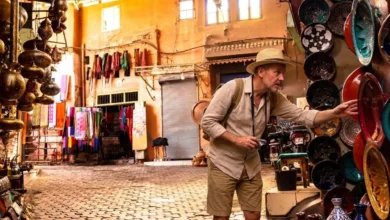
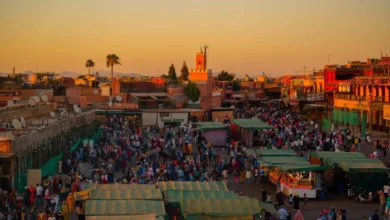
Do you know the difference between someone who visited Morocco and someone who actually discovered it?
The first one booked a tour, followed a guide, and saw exactly what they were meant to see. The second one got behind the wheel, took a wrong turn somewhere between the Atlas Mountains and the Sahara, and ended up drinking mint tea with a family they never expected to meet.
This guide is for the second kind of traveler.
Everything you need to know about driving in Morocco as a foreign visitor is here — your license, the rules, the rental game, police checkpoints, speed traps, and the routes that make the whole thing worth it. No filler, no obvious stuff, just what actually matters on the ground.
Table of Contents
Is Driving in Morocco Safe? Let’s Be Honest About It
It’s probably the first thing you searched before landing on this page, and the straight answer is: yes — but it demands a different kind of attention than what you’re used to.
The fear around driving in Morocco is significantly larger than the reality. Most travelers who get behind the wheel come away with a completely different impression than what travel forums had them expecting. The main highways are well-maintained and properly policed. Moroccan drivers, for the most part, have a fluid but functional relationship with the road — it’s not chaos, it’s a different rhythm.
That rhythm is where the real challenge lies. Morocco layers modern expressways on top of rural mountain roads where you’ll share the lane with a donkey cart, a loaded moped, and a pedestrian who sees no issue crossing wherever they please. Safety here isn’t about the road quality — it’s about you reading that rhythm quickly and adjusting.
Driving in Morocco as a Tourist: What Your License Actually Gets You
Your Foreign License — Does It Work Here?
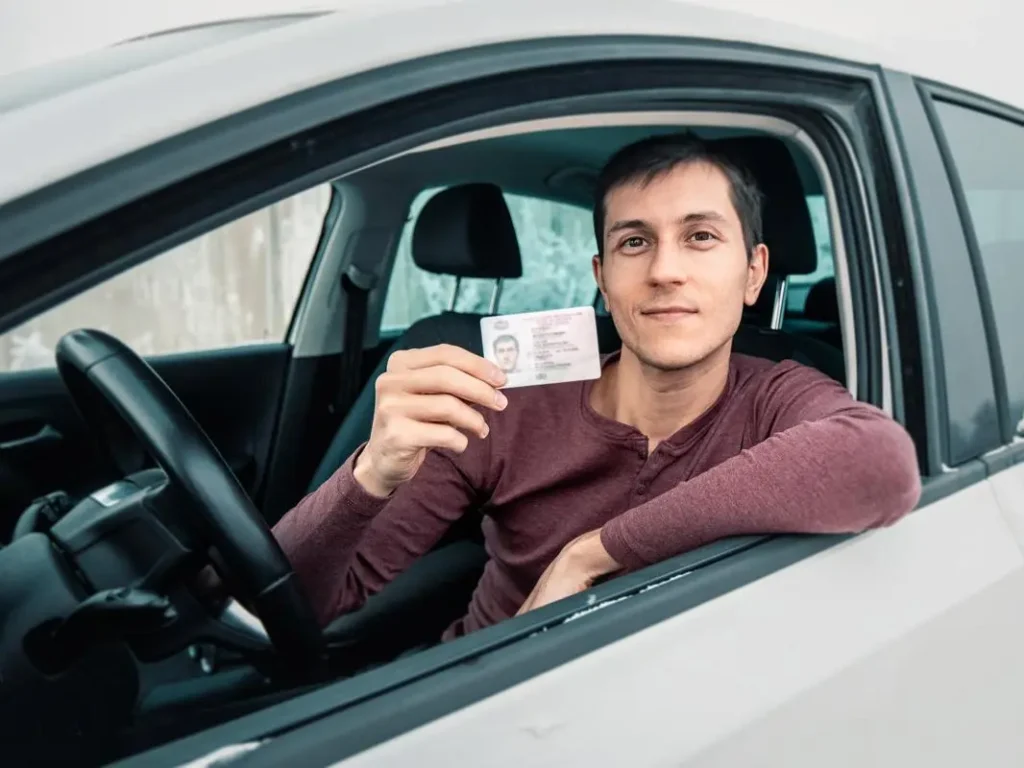
For most visitors, yes. If your license was issued in Europe, North America, Australia, or the Gulf states, you can drive in Morocco without an International Driving Permit (IDP). Moroccan law accepts foreign licenses as valid for tourists as long as they’re current and written in Latin script.
If your license uses non-Latin characters — Japanese, Korean, Arabic for non-residents, Cyrillic — you’ll need to carry an IDP alongside it. The IDP is not a replacement; it’s a certified translation. You must have both documents on you at all times.
How Long Can You Drive on a Foreign License?
As a tourist legally in the country, you can drive on your foreign license for the duration of your stay — provided you respect the standard 90-day tourist entry window. As long as you leave and re-enter within legal limits, your foreign license remains valid. The one-year rule only kicks in if you obtain a residency card (Carte de Séjour) and become an official resident.
What About Residents?
Once you hold a Carte de Séjour, Moroccan law gives you one year to exchange your foreign license for a Moroccan one. Citizens of France, Spain, Belgium, and Italy benefit from reciprocity agreements and can exchange directly without retaking tests. Other nationalities may need to pass the written or practical exam.
| Visitor Type | Required Document | Valid Duration |
|---|---|---|
| Tourist | Home country license (Latin script) | Duration of legal stay |
| Non-Latin license holder | Home license + IDP | Duration of legal stay |
| Official resident | Exchange for Moroccan license | Within 1 year of residency |
Always carry: passport, driving license, rental contract, insurance document, vehicle registration.
Driving in Morocco: Which Side of the Road?
Right side — same as France, Spain, and continental Europe. Overtaking is done on the left. If you’re coming from the UK, Australia, or South Africa, give yourself a few kilometers to recalibrate. It comes naturally faster than you’d think, especially once traffic around you starts doing the thinking for you.
Speed Limits in Morocco and How Enforcement Actually Works
The Official Numbers
| Road Type | Speed Limit |
|---|---|
| Urban areas | 40 – 60 km/h |
| National and regional roads | 80 – 100 km/h |
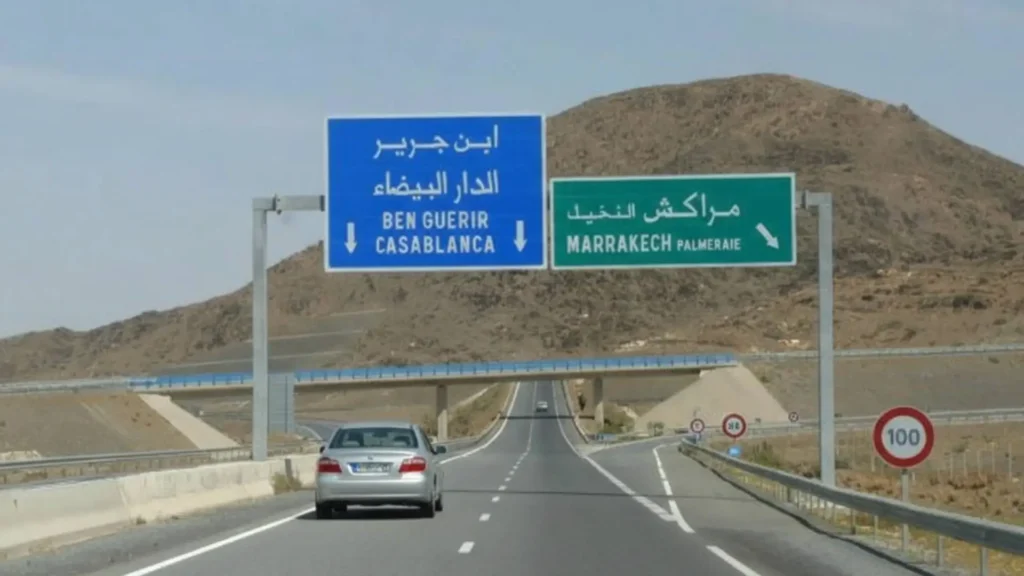
| Highways (Autoroutes) | 120 km/h |
What Enforcement Looks Like on the Ground
Morocco has invested heavily in fixed and mobile radar systems, and they’re not shy about using them. Radars appear on highways between lanes, on mountain passes, and at the exit of towns where limits drop sharply. There’s an unwritten code among drivers: oncoming traffic flashing their headlights at you means there’s a checkpoint or speed trap ahead. Pay attention to it.
Police checkpoints (known locally as barrages) are a routine part of driving here — not a sign that something’s wrong. The Gendarmerie Royale covers national roads and rural areas; the national police operate within city limits.
Common Fines You Should Know
- Failure to make a complete stop at a stop sign: 700 MAD (70$) — and slowing down doesn’t count
- Crossing an unbroken center line: on-the-spot fine
- No seatbelt: 300 MAD (30$)
- Driving under the influence: fine plus possible detention
One firm rule: if you’re fined, request an official receipt (quittance) and pay through proper channels. Attempting to bribe a law enforcement officer is a criminal offense in Morocco and can result in arrest. Don’t go there.
Driving Rules in Morocco: The Written Law vs. The Real World
Understanding the gap between the two is what separates a smooth road trip from a frustrating one.
Roundabouts: Legally, priority belongs to those already inside the roundabout (yield to the left). In practice — especially on older roundabouts and in rural areas — some drivers behave as if priority belongs to whoever enters first. Assume nothing. Make eye contact, watch the wheels, then move.
Lane discipline: In cities, some drivers position themselves between two lanes, leaving room for motorcycles on either side. It’s not aggression — it’s a local habit. Use your horn to signal you want to pass; it’s normal and expected.
Motorcycles and mopeds: In Marrakech and Casablanca especially, mopeds treat lane markings as optional. They appear from angles you wouldn’t anticipate. Defensive driving isn’t a precaution here — it’s the baseline.
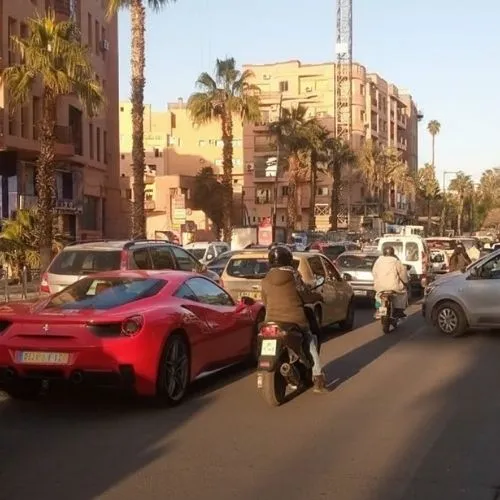
Pedestrians: Moroccan pedestrians cross wherever it makes sense to them, including on national highways near markets and towns. Expect it, slow down before it surprises you.
Tips for Driving in Morocco: Rental Cars Done Right
Driving Age in Morocco and Rental Requirements
The legal driving age in Morocco is 18, but virtually every rental company sets its own minimum at 21 or 23. Some charge a young driver surcharge for anyone under 25. You’ll also need to have held your license for at least one or two years — new license holders often face larger security deposits.
A valid credit card is non-negotiable. The rental company will place a hold on your card for the security deposit, which varies by vehicle type.
Rental Costs at a Glance
| Vehicle Type | Daily Rate (EUR) | Deposit Hold (EUR) |
|---|---|---|
| Economy (manual) | 20 – 35 | 500 – 1,000 |
| SUV / Crossover | 45 – 80 | 1,200 – 1,800 |
| 4×4 (off-road) | 90 – 200 | 1,500 – 2,500 |
Before You Drive Off the Lot
Document every scratch before leaving. Photos, video, close-ups — all of it. Make sure every pre-existing mark is noted on the rental agreement. This single step has saved countless travelers from disputes they didn’t cause.
Check the fuel level. Many rental cars in Morocco are handed over with a near-empty tank. Fill up before you go anywhere, and return the car at exactly the level you received it — not more.
Get the full insurance. Basic third-party coverage comes standard, but mountain roads and desert tracks have a way of finding your paint job. Comprehensive coverage (CDW) including glass and tire protection is worth every dirham, especially if you’re heading south or into the Atlas.
At the Gas Station
An attendant fills your tank — you don’t pump your own fuel in Morocco. Cards are accepted at major stations (Afriquia, Shell, Vivo Energy), but carry cash as a backup. Fuel prices are reasonable compared to most of Europe.
Police Checkpoints: What to Expect and How to Handle Them
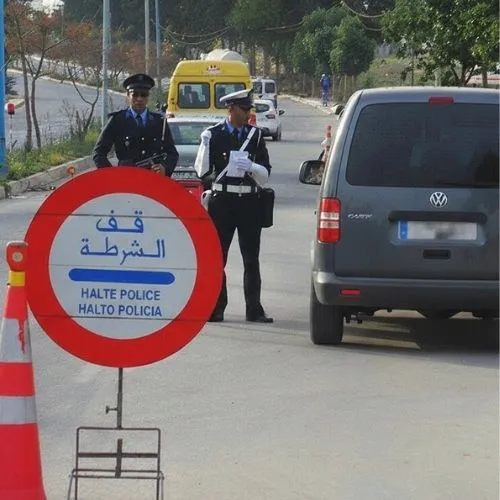
Checkpoints are common on tourist routes and major roads, and they’re nothing to stress about. When you see a “Halte Gendarmerie” or “Halte Police” sign, slow down significantly. If the officer waves you through, keep moving. If they signal you to stop, pull over calmly, cut the engine, and hand over your documents without being asked twice.
Most tourist encounters at checkpoints are brief — a glance at your passport and rental contract, a polite question about your destination, and you’re on your way. Keep your tone easy, your documents accessible, and don’t overthink it.
| Authority | Jurisdiction | Emergency Number |
|---|---|---|
| National Police | Cities and urban areas | 19 |
| Gendarmerie Royale | Highways, national roads, rural areas | 177 |
| Civil Protection | Medical emergencies, fire | 15 |
Morocco Road Trip: The Routes Worth Every Kilometer
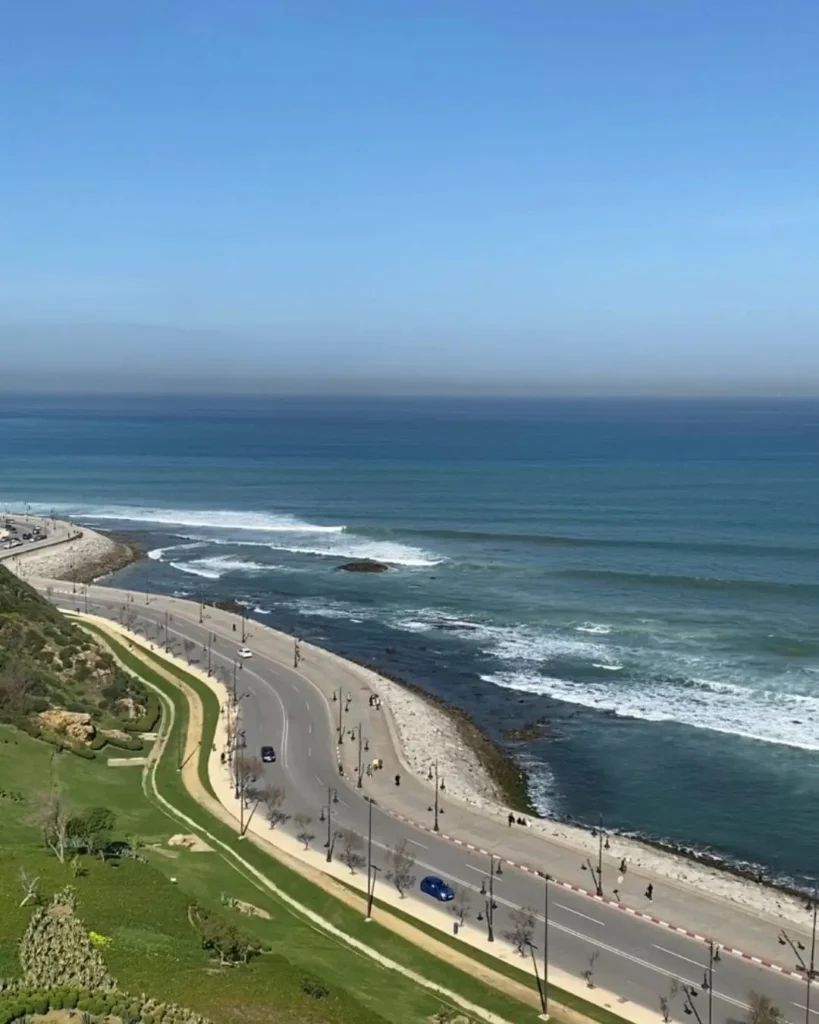
If the whole point of renting a car in Morocco is freedom, these are the roads that deliver on that promise.
The Atlantic Coast: Essaouira to Agadir (N1 Highway, 175 km)
One of the most underrated coastal drives on the African continent. The N1 cuts through argan forests where goats climb the branches — yes, actually climb — before opening into sweeping ocean views. The villages of Sidi Kaouki and Imourane are perfect stops for a coffee with the Atlantic at your feet.
Dades Gorge: The Road That Doubles Back on Itself
The zigzag road through Dades Valley is one of those places that looks invented — red canyon walls, a river below, and a road that seems designed by someone who enjoyed geometry a little too much. Staying overnight in a traditional kasbah here transforms a scenic drive into something you’ll describe to people for years.
Tizi n’Tichka Pass: Marrakech to Ouarzazate
At 2,260 meters, this is the highest mountain pass in Morocco and the spine of the High Atlas. The switchbacks are tight, the views are severe, and the experience of crossing from the green north to the ochre south in a single afternoon is genuinely disorienting in the best way. This route requires a competent driver and a vehicle in good condition — take it seriously.
Tizi n’Test: The Road Less Taken
Narrower and less traveled than Tizi n’Tichka, this pass connecting Marrakech to Taroudant offers some of the most dramatic driving in the country — single-lane sections with sheer drops and zero guardrails. Not for the faint-hearted, absolutely for anyone who wants to say they did it.
From Ifrane to Merzouga: Cedar Forests to Saharan Dunes
Starting in Ifrane — a town that looks like it was borrowed from the Swiss Alps — and ending at the golden dunes of Erg Chebbi, this route is arguably Morocco’s most diverse single itinerary. The landscape changes so dramatically that it feels like driving through multiple countries in a single day.
Night Driving in Morocco: A Simple Recommendation
Don’t. Outside city limits, most national roads have no lighting. You’ll encounter unlit trucks, livestock in the middle of the road, unmarked speed bumps, and potholes that appear without warning. The road that felt fine at 4pm becomes a genuine risk at 9pm. Plan your driving to end before dark whenever possible.
Toll Roads and Road Classification
Morocco’s highway network is well-maintained and toll-operated. Tolls are paid at dedicated booths — cash or card accepted. Use the ADM website (adm.co.ma) to estimate costs in advance. For reference: Tangier to Marrakech runs approximately 217 MAD (24$) ; Marrakech to Agadir around 72 MAD (8$).
Road types to know:
- N roads (Nationales): Main paved arteries between cities — generally reliable and well-marked
- R roads (Régionales): Connect smaller towns and rural areas — conditions vary, occasional unpaved sections
FAQ: Driving in Morocco as a Tourist — The Questions That Actually Matter
Do I need an International Driving Permit for Morocco?
Not if your license is from the EU, US, Canada, UK, Australia, or most Gulf states and is written in Latin script. If your license uses a non-Latin alphabet, the IDP is required — and it must accompany your home license, not replace it.
Can I drive a rental car into the Sahara or off-road areas?
Most standard rental agreements explicitly prohibit off-road driving and may void your insurance if you do it. If you plan to head into the desert or tackle unpaved tracks, rent a 4×4 specifically cleared for that purpose and confirm the insurance coverage in writing before you leave the lot.
What happens if I have an accident in Morocco?
Call the police immediately (19 in cities, 177 on national roads). Do not move the vehicles until authorities arrive and complete their report (constat à l’amiable). Contact your rental company. If anyone is injured, call emergency services (15) before anything else.
Is the traffic really as chaotic as people say?
In Casablanca and Marrakech, yes — it’s dense, fast-moving, and unpredictable. In Fes, Rabat, Agadir, and Essaouira, it’s considerably calmer. On open national roads and highways, driving in Morocco is genuinely pleasant. The reputation is earned by two cities, not the whole country.
What are “gardiens” and do I have to pay them?
Parking attendants (gardiens) in high-visibility vests are a fixture of Moroccan street life. They’re not government employees but operate with informal social authorization. Expect to pay 2–5 MAD (0.25 – 0.5 $) for daytime parking, 10–20 MAD (1_2 $) in the evening near hotels. It’s not extortion — it’s a micro-economy, and it works.
Can I use Google Maps reliably throughout Morocco?
In cities and on major routes, yes. In the Atlas Mountains, southern valleys, and remote desert areas, signal drops without warning. Download offline maps via Google Maps or Maps.me before leaving any city. This is non-negotiable if you’re heading anywhere scenic.
What’s the most common mistake tourists make when driving in Morocco?
Underestimating travel time. Distances on a map look manageable until a mountain road cuts your average speed to 40 km/h. Google Maps gives you a baseline — add at least an hour to any route involving the Atlas, the south, or secondary roads. The detours you’ll want to take are the whole point of the trip anyway.
Before You Go
Driving in Morocco rewards the prepared traveler. Not the anxious one, not the reckless one — the prepared one. Get your documents in order, take the comprehensive insurance, download the offline maps, and plan to be off the road before sunset.
The rest takes care of itself. Morocco has a way of doing that.
Note: Some illustrative images in this article were edited using AI.
Read also: