At a Glance
| Best months for a first trip | April and October |
| Cheapest period | January – February (excluding Amazigh New Year) |
| Best time for Marrakech | March – May / October – November |
| Best time for the Sahara | October – April |
| Best time for beaches | June – September |
| Ramadan | Shifts ~11 days earlier each year (check the Islamic calendar) |
| Eid al-Adha 2026 | ~May 27 |
| 2025 visitor count | 19.8 million (all-time record) |
Table of Contents
The Question Everyone Gets Wrong
Here’s what happens when you type “best time to visit Morocco” into a search bar: you get the same answer, repeated across dozens of websites, in almost identical phrasing. Spring and fall. March to May, September to November. Rinse. Repeat.
That answer isn’t wrong. But it’s lazy — and it costs travelers real experiences they could be having if they understood one fundamental thing: Morocco is not one climate. It’s four, operating simultaneously, separated by mountain ranges, ocean currents, and a few hundred kilometers of altitude.
In January, the High Atlas gets buried in snow. In that same week, Agadir’s beaches sit at a comfortable 19°C. In July, Marrakech hits 45°C while Essaouira — two hours away — rarely cracks 28. The Sahara freezes at night in December, then bakes past 45 by June.
So the real answer to “when should I go?” starts with a different set of questions: What do you want to do? Where do you want to go? And what kind of traveler are you?
This guide breaks down every season, region, and major event on the 2026 calendar. It covers the logistics most guides skip — what Ramadan actually does to your itinerary, how Morocco’s clock change can wreck your flight, and why 2026 specifically offers conditions that won’t last.
Why 2026 Is a Smart Year to Visit Morocco
Before we get into months and temperatures, some context.
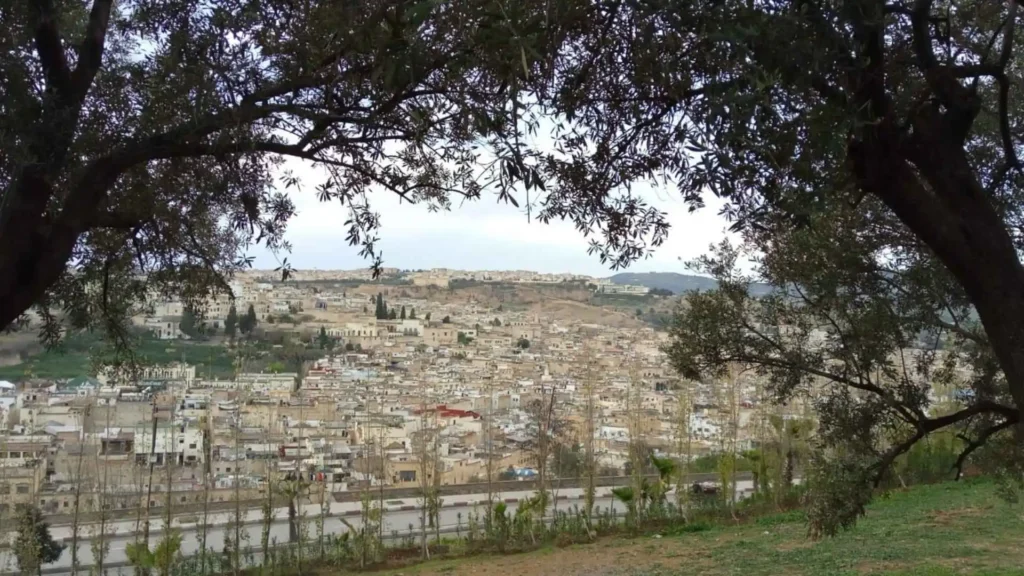
Morocco is in the middle of a transformation that most travelers haven’t caught onto yet. In 2025, the country welcomed roughly 20 million visitors — a record that exceeded the government’s own targets for 2026. Tourism revenue hit 124 billion dirhams (approximately $13.6 billion) in the first eleven months alone. By January 2026, over a million tourists had already crossed the border.
But the numbers are less interesting than what’s driving them. Morocco is co-hosting the 2030 FIFA World Cup with Spain and Portugal. That means airports are expanding, the high-speed rail network is growing, and international hotel brands — Four Seasons, Nobu — are breaking ground. Infrastructure is being built at a pace the country has never seen.
Here’s the catch: the prices haven’t caught up yet. In 2026, you get upgraded roads, better rail connections, and newer hotels — at pre-World Cup rates. That equation has an expiration date.
What Is the Best Time to Visit Morocco by Season?
Spring (March – May): The Safe Bet, With a Caveat
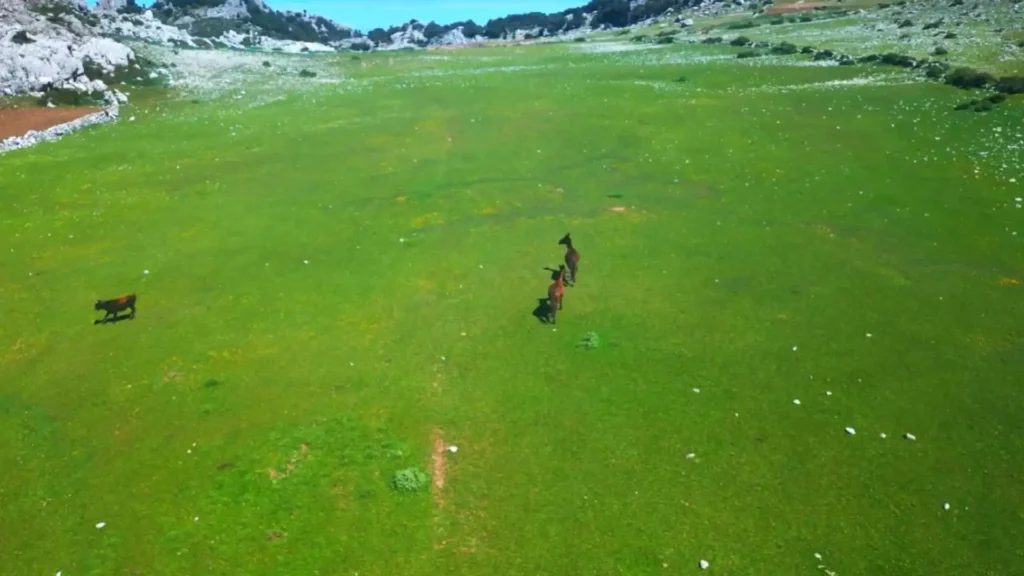
If you’re asking about the best time to visit Morocco weather-wise, spring is the textbook answer. Temperatures range from 18 to 28°C across most of the country. Rain tapers off after March. The landscape shifts — rose fields bloom in the Dades Valley, almond trees flower in Tafraoute, and the snow on the Atlas peaks softens into streams.
But here’s the caveat: Ramadan sometimes falls in this window. The Islamic calendar shifts roughly 11 days earlier each year, so check the dates for your travel year. If Ramadan overlaps with March, expect a different rhythm in the first half of the month. Non-tourist restaurants close during the day, business hours shift, and the medinas of Fes and Marrakech operate on altered schedules.
April is the month I’d recommend for a first visit. The weather is right, the post-Ramadan energy is high, and summer pricing hasn’t kicked in. Hotel occupancy in Marrakech hits 85% in April, so book early — not as a suggestion, but as a necessity.
May brings the Rose Festival in Kelaat M’Gouna, where streets are literally carpeted in petals and the scent of Damascene rose carries through the valley. It’s also the last month you can comfortably visit the Sahara before the heat shuts things down.
Note: Eid al-Adha is expected around May 27 in 2026. Commercial life pauses for roughly three days. Shops and restaurants close. Plan around it.
Summer (June – August): Stick to the Coast
Summer in Morocco is two completely different experiences depending on where you are.
Inland cities (Marrakech, Fes, Meknes): Temperatures regularly exceed 40°C and can touch 45. Walking through the medina at midday goes from uncomfortable to inadvisable. July and August in the interior are for travelers who genuinely tolerate extreme heat — not those who think they do.
The coast (Essaouira, Tangier, Agadir, Taghazout): A different story entirely. Atlantic breezes hold temperatures between 25 and 30°C. Essaouira, famously windy, rarely passes 28 even in peak August. Taghazout offers prime surf conditions during this stretch.
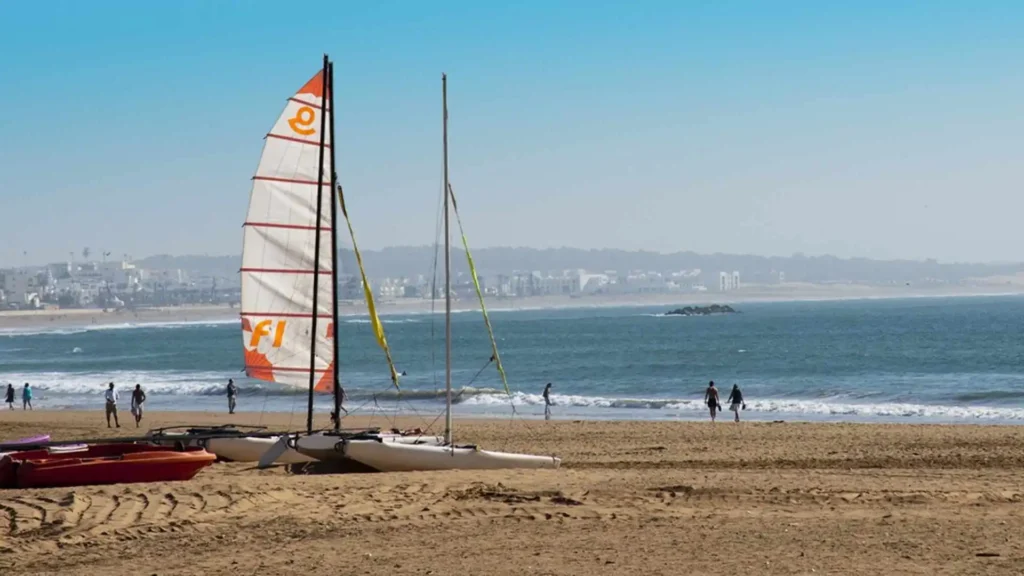
The Gnaoua World Music Festival hits Essaouira June 25–27, 2026. It’s one of Africa’s premier music events — free open-air concerts in Place Moulay Hassan drawing over 500,000 visitors across three days. Accommodations book out months ahead.
Mawazine in Rabat (expected June 19–27) is Africa’s largest music festival by attendance. Most stages are free.
Fall (September – November): The Photographer’s Pick
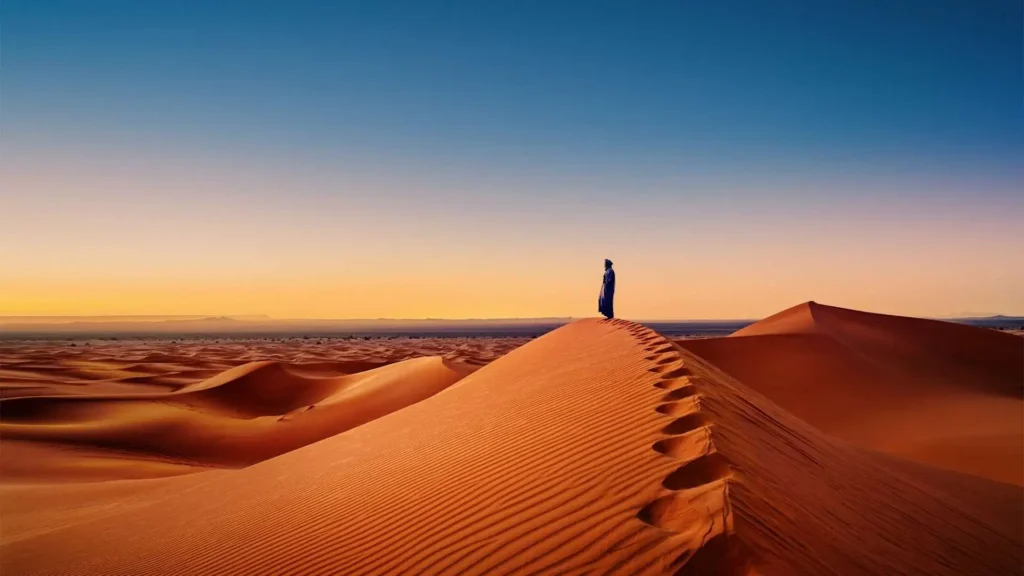
Ask a professional photographer when is best time to visit Morocco, and you’ll hear one answer: October. Not just because the weather is ideal — 20 to 28°C — but because the light changes. The pre-sunset window stretches longer in autumn, and the Sahara dunes near Merzouga take on a deep orange warmth that gives images a dimension you can’t replicate in other months.
September marks the return of comfortable conditions to the interior cities. Hotel prices drop from their summer peak, and the beaches thin out from the local summer crowd.
October is the month of the Erfoud Date Festival — a window into Morocco’s oasis culture. It also marks the start of ideal conditions for camel treks in the Sahara: warm days, cool nights, and clear skies that make desert camp stargazing genuinely spectacular.
November brings the olive harvest in Meknes and Fes, adding an agricultural layer to any trip through the north. Some rain is possible, but rarely heavy enough to disrupt plans.
Winter (December – February): Low Crowds, High Reward
Winter is Morocco’s quietest season — and that’s precisely the point. Walking through Fes el Bali without tour groups. Sitting in a Marrakech riad with mint tea beside a fireplace. Getting hotel rates 30 to 50% below peak season. All of this is available between December and February.
December features the Marrakech International Film Festival — with free outdoor screenings in Jemaa el-Fnaa. The Christmas and New Year’s week sees a price spike and booking crunch, so plan ahead.
January is the coldest and emptiest month. But it carries a cultural event worth noting: Amazigh New Year (January 14), now an official public holiday, with communal celebrations in Atlas Mountain villages.
February brings the Almond Blossom Festival in Tafraoute, in the Anti-Atlas. It’s an excellent time to see Morocco at its most unhurried. Ramadan may fall in this period depending on the year — check the Hijri calendar in advance.
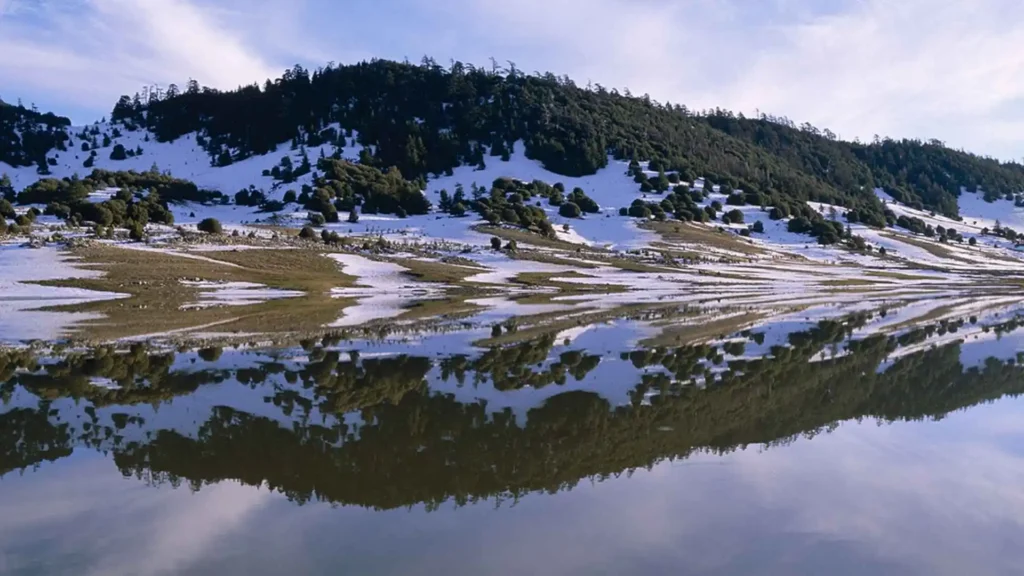
Winter warning: If your trip includes the Atlas Mountains or the Sahara, don’t underestimate the nighttime cold. Temperatures drop below freezing at altitude and in the desert after dark. Traditional riads don’t always have central heating. Layering isn’t optional.
Best Time to Visit Morocco Marrakech: A Closer Look
Marrakech deserves its own breakdown because it’s where most visitors spend the bulk of their time. The short answer: October through May, avoiding the July–August furnace.
The longer answer is more useful:
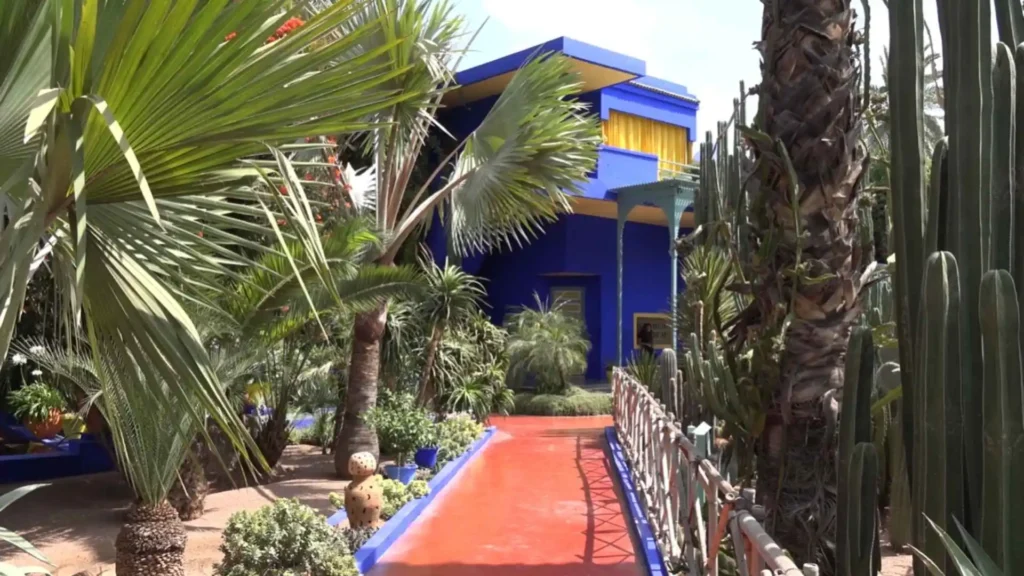
March – April: Ideal walking weather in the medina. Majorelle Garden is green and lush. Easy to combine with a day trip to the Ourika Valley in the Atlas foothills.
October – November: The heat has broken, prices are reasonable, and Jemaa el-Fnaa returns to its evening rhythm — storytellers, musicians, and smoke rising from the food stalls.
December: Festive without the heat. The film festival adds cultural weight. Sunny days, cold nights.
July – August: Skip it unless you handle extreme heat well. Redirect to the coast — Essaouira is two hours away and 15 degrees cooler.
Read also: The Ultimate Marrakech Travel Guide 2026: Everything You Need to Know Before Visiting the Red City
When Is the Best Time to Visit Morocco for Weather? A Regional Breakdown
Morocco contains four distinct climate zones. Knowing which one you’re headed to matters more than the month on the calendar.
The Atlantic Coast (Casablanca, Rabat, Essaouira, Agadir)
Mild year-round thanks to the ocean’s moderating effect. Summer (June–September) is prime beach weather at 25–30°C. Winter sits around 16–19°C with occasional rain. Agadir stays warm enough for outdoor dining even in January.
The Interior Cities (Marrakech, Fes, Meknes)
Sharp seasonal swings. Spring and fall are the comfort zone at 20–28°C. Summer pushes past 40. Winter gets genuinely cold in Fes and Meknes, where nighttime lows dip below 5°C.
The Atlas Mountains
Hiking and trekking season runs April through October. Winter brings snow — the Oukaïmeden ski resort operates December through February. Smaller Atlas villages like Imlil and Ifrane regularly see sub-zero temperatures.
The Sahara (Merzouga, Zagora, Erg Chigaga)
Optimal window: October – April. Daytime warmth with clear, cold nights — ideal for stargazing from desert camps. Avoid June through August, when daytime temperatures push past 45°C and insects become an issue.
The Mediterranean Coast and the Rif (Tangier, Chefchaouen, Tetouan, Al Hoceima)
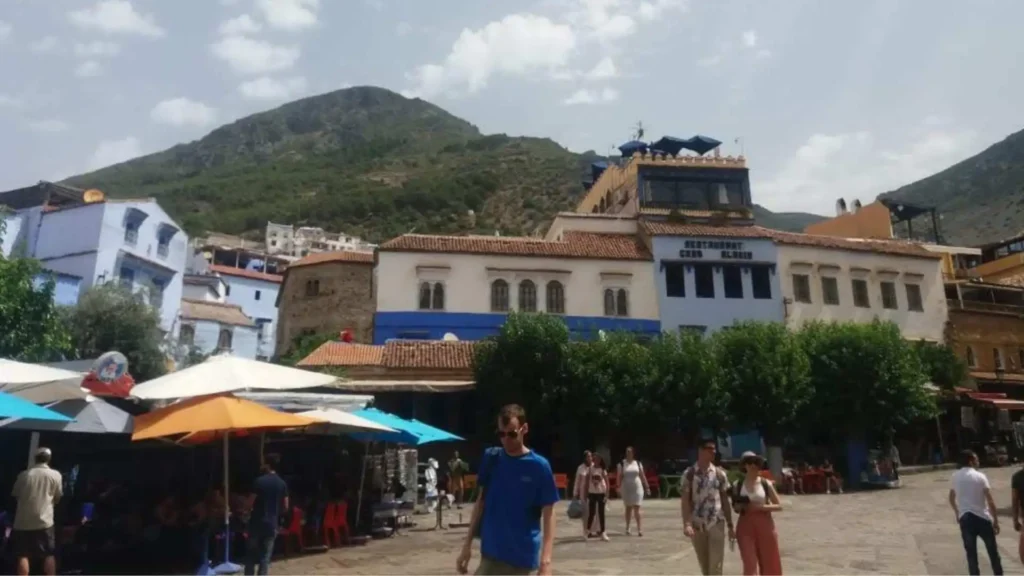
Classic Mediterranean climate. Summer (May–September) is sunny and warm with less humidity than the interior. Chefchaouen photographs best in April–May and September–October — 18 to 25°C with clear skies.
Does Ramadan Affect Your Trip?
Ramadan shifts roughly 11 days earlier each year on the Gregorian calendar. In recent years it has fallen in the February–March window, and it will continue moving toward winter. Always check the Hijri calendar for your travel year.
Visiting during Ramadan isn’t a problem — but it does change the texture of the trip.
What actually changes
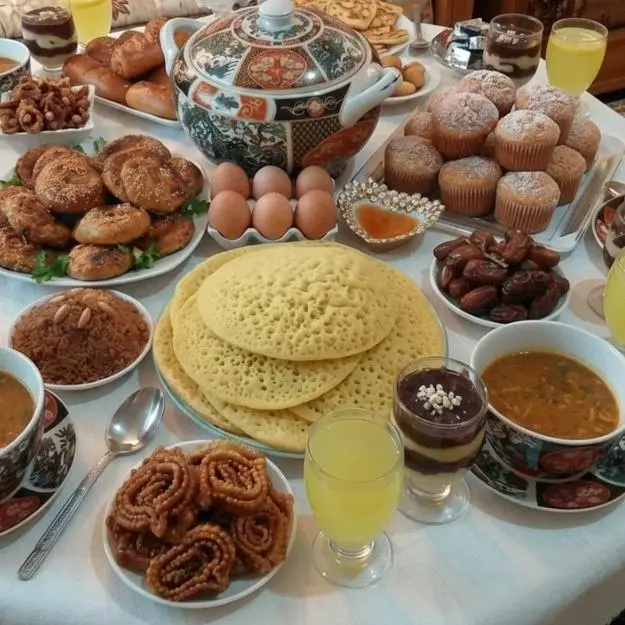
Tourist restaurants and hotels remain open during the day. Local restaurants — often the better ones — close until sunset. Museums and historical sites may reduce their hours. Shops in the medina open later and close before iftar. Streets are unusually quiet in the afternoon, but the moment the fast breaks, cities undergo a complete transformation — sound, movement, and the smell of harira and chebakia fill every alley within minutes.
The quiet half-hour
About thirty minutes before sunset during Ramadan, Moroccan cities go nearly silent. Streets empty. Noise drops. The scent of cooking drifts from every window. Then the maghrib call to prayer sounds, and everything switches back on — instantly. If you’re interested in culture, this daily transition is worth experiencing at least once.
The clock change catch
Morocco suspends daylight saving time during Ramadan, then reinstates it afterward. This can cause a sudden shift in the time difference between Morocco and your home country. Double-check your flight times during this transition period.
2026 Festival and Events Calendar
| Month | Event | Location | Practical Note |
|---|---|---|---|
| January | Amazigh New Year (Jan 14) | Nationwide – especially the Atlas | Official public holiday |
| February | Almond Blossom Festival | Tafraoute | May overlap with Ramadan |
| March | Eid al-Fitr (date varies) | Nationwide | 2–3 day closure |
| April | Marathon des Sables | Eastern Sahara | One of the world’s toughest races |
| May | Rose Festival | Kelaat M’Gouna | Book accommodation early |
| May | Eid al-Adha (~May 27) | Nationwide | 3+ day closure |
| June | Gnaoua Festival | Essaouira (Jun 25–27) | Free – book lodging months ahead |
| June | Mawazine | Rabat (~Jun 19–27) | Africa’s largest music festival |
| June | Fes Festival of Sacred Music | Fes (Jun 4–7) | Intimate, deeply cultural |
| July | Jazzablanca | Casablanca | Tickets from 350 MAD |
| Aug/Sep | Imilchil Marriage Festival | Imilchil (High Atlas) | Requires 4×4 access |
| October | Date Festival | Erfoud | Combine with a Sahara trip |
| December | International Film Festival | Marrakech | Free screenings at Jemaa el-Fnaa |
Best Time to Visit Morocco and Spain on the Same Trip
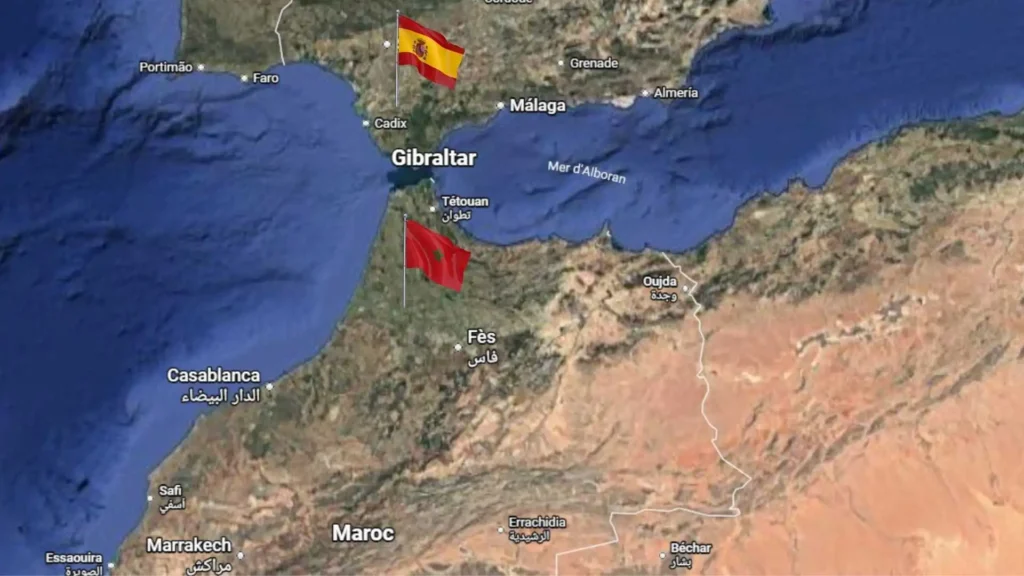
A lot of travelers search for the best time to visit Morocco and Spain together, and the geography makes it a natural combination. Tangier sits just 14 kilometers from Spain across the Strait of Gibraltar. The ferry takes 35 minutes.
Best window for both countries: April–May or September–October. Comfortable weather on both sides, with reasonable pricing outside summer peaks.
A practical route: Start in Andalusia — Seville, Granada, Córdoba — then ferry to Tangier and work your way south through Chefchaouen, Fes, and down to Marrakech. The Andalusian influence in Moroccan architecture creates a cultural thread that ties the trip together.
The Al Boraq high-speed train connects Tangier to Casablanca in two hours and ten minutes, making internal travel faster and smoother than it’s ever been.
When Is Morocco Cheapest to Visit?
The season directly affects your costs:
Peak season (June – August + December holidays): Hotels at their highest. Upscale riads in Marrakech start at €150–250 per night. Sahara tours run €160–220.
Shoulder season (March – May / September – November): The best value-to-experience ratio. Mid-range hotels in major cities run €90–150. Moderate crowds, excellent weather.
Low season (December – February, excluding Christmas week): The cheapest rates. Expect 30–50% discounts on accommodation. Tourist sites are nearly empty.
A field note: Don’t sacrifice location for price. A modestly priced riad inside the medina walls will give you a better trip than a luxury hotel in the suburbs. In Morocco, geography is the experience.
Getting Around Morocco in 2026
Flights in
Morocco’s air connectivity expanded significantly. Over 80 new routes were added in 2025 alone. European budget carriers — Ryanair, EasyJet — link major cities to Marrakech, Agadir, and Fes at prices that sometimes undercut intra-European flights.
From North America, direct routes connect major US cities to Marrakech and Casablanca via Royal Air Maroc and other carriers.
Read also: Ryanair and TUI Fly Belgium to Launch New Morocco-Spain Routes for Summer 2026
Getting around
- Al Boraq high-speed rail: Tangier to Casablanca in 2 hours 10 minutes.
- Standard rail: A comfortable network linking Casablanca to Marrakech (2.5 hours), Fes, Rabat, and Meknes.
- Long-distance buses: CTM and Supratours cover intercity routes reliably.
- Rental car: The best option for the south, the Sahara, and the Atlas Mountains. Road quality has improved considerably.
- Ride apps in cities: InDrive is available in major cities and lets you negotiate fares before the ride — a practical way to avoid taxi disputes. Careem operates in some cities as well. Petit taxis (small city cabs) are everywhere and run on meters — insist the driver turns it on before you move.
Read also: Driving in Morocco (2026): What Every Traveler Should Know Before Getting Behind the Wheel
What to pack
Morocco is culturally conservative. Clothing that covers shoulders and knees is required at religious sites and appreciated in the medinas. Layering is essential — the gap between daytime heat and nighttime cold can exceed 15°C, especially in the desert and mountains. Comfortable walking shoes for the uneven cobblestones of the old cities. Strong sunscreen year-round — Moroccan sun doesn’t take days off.
Frequently Asked Questions
Can you visit Morocco year-round?
Yes. Morocco works in every season, but your experience changes dramatically depending on the month and the region. The coast suits summer. The interior cities are at their best in spring and fall. The Sahara is optimal from October through April.
What’s the best time to visit Morocco for a first trip?
April or October. Comfortable weather across all regions, moderate crowds, and fair pricing. You can combine cities, mountains, and desert without climate restrictions.
Is Morocco safe for tourists?
Morocco ranks among the safest destinations in Africa and the Arab world. Tourism is a cornerstone of the economy, and the security infrastructure around it is well developed. Standard precautions — avoiding isolated alleys at night, watching for pickpockets in crowds — are sufficient.
When are Morocco hotel prices at their lowest?
January and February (excluding the New Year period). Also the first half of December and the second half of November.
Can you combine Morocco and Spain in one trip?
Easily. The ferry between Tangier and Tarifa, Spain takes 35 minutes. April–May and September–October are the ideal windows for both countries.
What is the best time to visit Morocco for photography?
October and November. The warm autumn light gives the sand dunes, old cities, and mountain landscapes a richness that’s hard to match. April also works well for green fields and wildflower shots.
Does Ramadan ruin a Morocco trip?
No — but it changes it. Tourist hotels and restaurants stay open normally. Local restaurants close during daylight hours. If you’re culturally curious and flexible, Ramadan offers an experience you won’t get any other time of year. The dates shift annually, so check the Islamic calendar when planning.
The Bottom Line
There’s no single best month that works for everyone. But if forced to pick one, I’d say April. If forced to pick a season, fall. And if you’re a flexible traveler looking for solitude and lower prices, January will surprise you.
Morocco doesn’t disappoint in any season. It shifts. It challenges you — with its heat, its cold, its different rhythm during Ramadan. But it delivers. And 2026, with its upgraded infrastructure and its pre-2030 pricing, offers a set of conditions that won’t hold together indefinitely.
Plan well, pack layers, and leave room in your itinerary for the unplanned — because the best moments in this country rarely happen on schedule.
Read also: