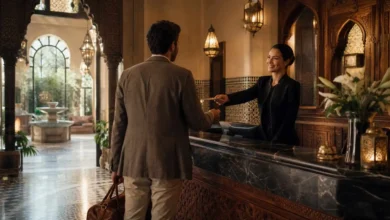
Rabat rolled out the red carpet on Wednesday, April 22, as the third edition of Diyafa Celebration Week officially kicked off in the Moroccan capital. This year’s theme — “Moroccan Hospitality: From Heritage to Tourism Excellence” — sets the tone for a week-long conversation about what may be the kingdom’s most underrated tourism asset: the instinctive warmth with which Moroccans welcome strangers.
Far more than a ceremonial gathering, Diyafa Week has carved out a role as a reference platform for elevating Morocco’s intangible heritage. The event zeroes in on hospitality as a strategic lever, rallying every corner of the tourism ecosystem around a shared mission — giving the professions that power Moroccan welcome the recognition they deserve.
From Destination to Experience: Morocco Rewrites Its Tourism Playbook
Delivering the opening address, Fatim-Zahra Ammor, Minister of Tourism, Handicrafts, and Social and Solidarity Economy, made a striking argument: Moroccan hospitality has outgrown its status as a cultural relic. It now functions as a measurable standard of excellence and, more importantly, a genuine competitive edge on the world tourism map.
When a spirit of generosity runs through an entire nation rather than showing up in isolated pockets, the Minister argued, it becomes something rare — a collective language that few destinations can authentically offer. She pointed out that under Morocco’s 2023-2026 tourism roadmap, the country has deliberately pivoted away from selling a destination and toward curating an experience. And it’s precisely within that experiential framework, she noted, that Moroccan hospitality finds its fullest expression.
The Numbers Tell the Story: 20 Million Visitors, 138 Billion Dirhams
The minister then let the data do some of the talking. In 2025, Morocco welcomed roughly 20 million international visitors — a historic milestone for the kingdom. That influx translated into foreign currency revenues of 138 billion dirhams and 90,000 new jobs, pushing the total number of tourism professionals in the country to approximately 900,000.
But Ammor was careful not to let the figures eclipse the bigger picture. She turned her attention to the next generation, calling on young Moroccan professionals to carry the hospitality tradition forward while injecting it with fresh thinking. In a global tourism landscape that too often feels copy-pasted from one destination to another, she argued, reinventing the codes of Moroccan welcome is how the kingdom will stay distinct.
The minister also doubled down on the importance of ongoing investment in the sector, especially in training and human capital — the real backbone, she stressed, of any quality promise. Her message to industry players was direct: embed excellence into daily operations and keep investing in your teams.
Hospitality as a “Future Industry”
Hamid Bentahar, President of the National Tourism Confederation, picked up the thread by championing what he called a “culture of celebration” — a way of honoring the quiet, daily work of tourism professionals who rarely make headlines. Hospitality, he reminded the audience, isn’t confined to hotels and restaurants. It draws on a broad skill set that blends communication, creativity, and leadership, which is why the field opens doors far beyond the traditional tourism track.
Bentahar didn’t mince words when describing the sector’s trajectory: tourism, in his view, is a “future industry” in the truest sense — remarkably resilient, quick to bounce back from crises, and capable of generating real value even when the global economy wobbles.
He spoke with particular optimism about the opportunities the industry offers to young entrepreneurs and rising talent, urging them to hold on to their passion and take ownership of this intangible heritage with pride. And with a series of major international events on Morocco’s horizon, Bentahar emphasized that the kingdom’s unique brand of welcome will be decisive in how the country shows up on the world stage. He closed by crediting ordinary Moroccans — the people whose everyday gestures quietly keep this identity alive.
A Timely Conversation
Diyafa Celebration Week is co-organized by the Ministry of Tourism, Handicrafts, and Social and Solidarity Economy, the National Tourism Confederation, and the Moroccan National Tourism Office. This third edition arrives at a pivotal moment for the country’s tourism industry, which is riding an exceptional growth wave while the 2023-2026 strategic roadmap continues to take shape on the ground.
The timing isn’t accidental. With Morocco preparing to host events of genuine global significance in the coming years, the pressure is on to raise standards of welcome and professional training to match the country’s ambitions — and weeks like this one are where that conversation gets serious.
Read also: