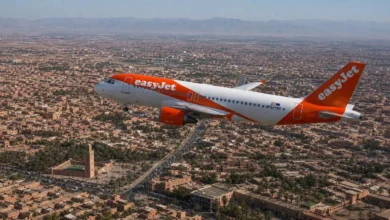
Morocco just pulled off the kind of win that reshapes a country’s tourism map for years. Ryanair, Europe’s largest low-cost airline, announced Monday it will boost capacity in Morocco by 11% this summer — while slashing 1.2 million seats from regional airports across Spain.
The announcement came from CEO Eddie Wilson at a press briefing in Madrid, and it lands as one of the clearest signals yet that Morocco has graduated from a secondary market to a strategic priority for Europe’s budget aviation giants. Italy received a 9% capacity bump in the same announcement. Spain got the bill.
Why Morocco Won This Round
Wilson didn’t dress up the reasoning. Morocco and Italy, he said, are “significantly more competitive” than Spain — code for lower airport fees, smarter incentive structures, and governments that actually want the planes to land.
For travelers, that competitiveness translates into something concrete: more flights, better frequencies, and lower fares into the Moroccan cities that matter most. Marrakech, Fes, Agadir, Tangier, Rabat, Essaouira, and Nador are all part of Ryanair’s expanded Moroccan network, and the 11% increase means tourists flying from London, Milan, Frankfurt, Brussels, or Dublin will find more direct options than ever before — often at prices that undercut anything Spain can match this season.
The Spanish Collapse Behind the Moroccan Gain
Ryanair’s Spanish retreat has been brutal. Over the past 18 months, the airline has stripped 3 million seats from Spain’s regional airports, with this latest 1.2 million cut representing the deepest blow yet. The carrier’s frustration centers on Aena, Spain’s state-controlled airport operator, whose fees Wilson described as “absolutely uncompetitive.”
His sharpest line was reserved for the Spanish government, which holds a 51% stake in Aena. According to Wilson, Madrid would rather pocket €834 million in dividends than reinvest in lowering fees or supporting regional airports — a policy he claims has left Spain’s secondary airports operating at less than 30% of capacity, hemorrhaging routes, tourists, and jobs.
Morocco, in this picture, isn’t just a beneficiary. It’s the alternative.
What This Actually Means for Travelers Eyeing Morocco
The timing couldn’t be better for the Moroccan tourism sector. The country closed 2025 with nearly 20 million visitors — a 14% jump in a single year — and is climbing steadily toward its 26 million target for 2030, the year Morocco co-hosts the FIFA World Cup.
What makes this Ryanair expansion different from previous capacity bumps is where the planes are landing. By feeding flights into secondary Moroccan airports rather than concentrating them in Casablanca and Marrakech, the airline is opening up a different style of Morocco trip altogether. Think long weekends in Tangier, surf-and-stay weeks in Essaouira, food-focused breaks in Fes, and Atlas-edge escapes through Nador — the kinds of trips that simply don’t pencil out when you’re stuck connecting through major hubs.
For independent travelers, slow-travel enthusiasts, and budget-minded tourists looking past the standard postcard circuit, the math just got friendlier.
The Pressure That Won’t Go Away
Ryanair hasn’t completely written off Spain. Wilson floated a counter-offer: reform the airport fee structure, and the airline is prepared to grow Spanish operations by 40% — adding 33 new based aircraft, opening five new regional bases, and pushing traffic to 77 million passengers a year by 2031.
It’s a generous offer with a sharp edge. Translation: capital follows opportunity, and right now, opportunity is wearing a Moroccan stamp on its passport.
For Madrid, that’s a problem to solve. For Rabat, it’s a runway already cleared.
read also: