Morocco just secured a diplomatic and economic win that will resonate far beyond its borders. On Thursday, April 23, the Moroccan capital Rabat hosted the official launch of UN Tourism’s new Thematic Office for Innovation in Africa — the first continental office of its kind ever established by the agency on African soil.
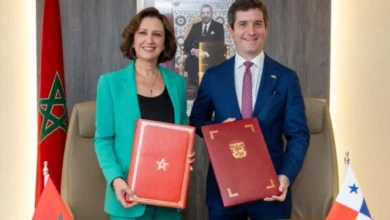
The inauguration was led jointly by Fatim-Zahra Ammor, Morocco’s Minister of Tourism, Handicrafts, and Social and Solidarity Economy, and Shaikha Nasser Al Nowais, Secretary-General of UN Tourism. Ambassadors from several African member states attended the event, along with representatives of the United Nations country team in Morocco.
What the New Office Actually Does
The Rabat-based office is the operational arm of UN Tourism’s 2030 Agenda for Africa — the framework the agency uses to position tourism as an engine for economic and social development across the continent. In practical terms, the office is tasked with translating that agenda from paper to the ground.
Its mandate rests on three pillars. The first is capacity-building programs designed for both public-sector decision-makers and private-sector operators. The second is organizing specialized forums dedicated to tourism innovation, giving the continent a recurring space to debate, benchmark, and showcase what works. The third is supporting entrepreneurship initiatives at a pan-African scale, with a particular focus on startups shaping the next chapter of African travel.
Beyond those formal missions, the office is meant to function as a meeting point — where ideas, talent, and partnerships converge to define what African tourism will look like in the coming decade.
Why Morocco Was the Natural Choice
The decision to place this office in Rabat rather than elsewhere on the continent was not accidental. Morocco brings a combination of assets few African countries can match: a decades-long track record in tourism infrastructure and promotion, consistent ranking among Africa’s top-performing destinations, and a geographic position that functions as a bridge between the continent and both Europe and the Atlantic world.
Equally important is Morocco’s foreign policy orientation. The country has made South-South cooperation a cornerstone of its diplomacy under King Mohammed VI, and the Kingdom’s pan-African posture made it a credible host for an institution whose scope covers all 54 African countries.
What Officials Said in Rabat
Speaking to reporters on the sidelines of the ceremony, UN Tourism Secretary-General Shaikha Al Nowais described the launch as a significant moment for the tourism sector, citing Morocco’s recent progress in the industry and its target of welcoming 20 million international visitors by the end of the year. She stressed that the new office should be understood not as another administrative layer, but as a working platform — one designed to back startups, accelerate digital transformation, and develop the skills that will define the African tourism workforce of tomorrow.
Minister Ammor framed the initiative within the broader vision of King Mohammed VI for South-South cooperation. She argued that the office cements Morocco’s role as a central actor in African tourism and a reliable interlocutor for international institutions operating on the continent.
The Continental Numbers Behind the Launch
Ammor also used her remarks to put recent African tourism data on the table. The continent welcomed 81 million tourists in 2025, registering an 8% growth rate — figures that underscore the momentum the new office is meant to build on. She pointed to Africa’s cultural heritage, its natural diversity, and the creative energy of its young population as assets that remain under-leveraged on the global tourism map.
The minister was careful to define what innovation actually means in this context. It is not, she noted, a matter of technology alone. Innovation in tourism also covers economic models, locally rooted experiences, sustainability practices, connectivity, and — perhaps most critically — the inclusion of youth, women, entrepreneurs, and host communities in the value chain.
The Legal Architecture
The office operates under a two-part legal framework. The first document is the host agreement signed in Marrakech on January 28, 2025, which establishes the legal foundations of the office, grants it juridical personality, and sets out its operating rules. The second is the agreement on financial and administrative arrangements signed on May 29, 2025, in Segovia, Spain, which spells out Morocco’s financial and operational commitments to ensure the office runs at full capacity.
Taken together, the two agreements give the office both the legitimacy and the resources it needs to deliver on its mandate.
The Rabat launch arrives at a moment when African tourism stakeholders are actively rethinking how they cooperate — and how they compete — in a global market increasingly shaped by three priorities: innovation, sustainability, and job creation for a continent whose median age is under 20.
Source: (MAP)
Read also: